GTA 6 NPCs and world density: what Rockstar has confirmed about Vice City's crowds
Over 50 real street artists painted the murals, an entire Rockstar office does nothing but pedestrians, and the animation count is more than ten times GTA V's. Here is what Rockstar has actually confirmed about Grand Theft Auto VI's world density, and where the word 'lived-in' stops meaning anything.
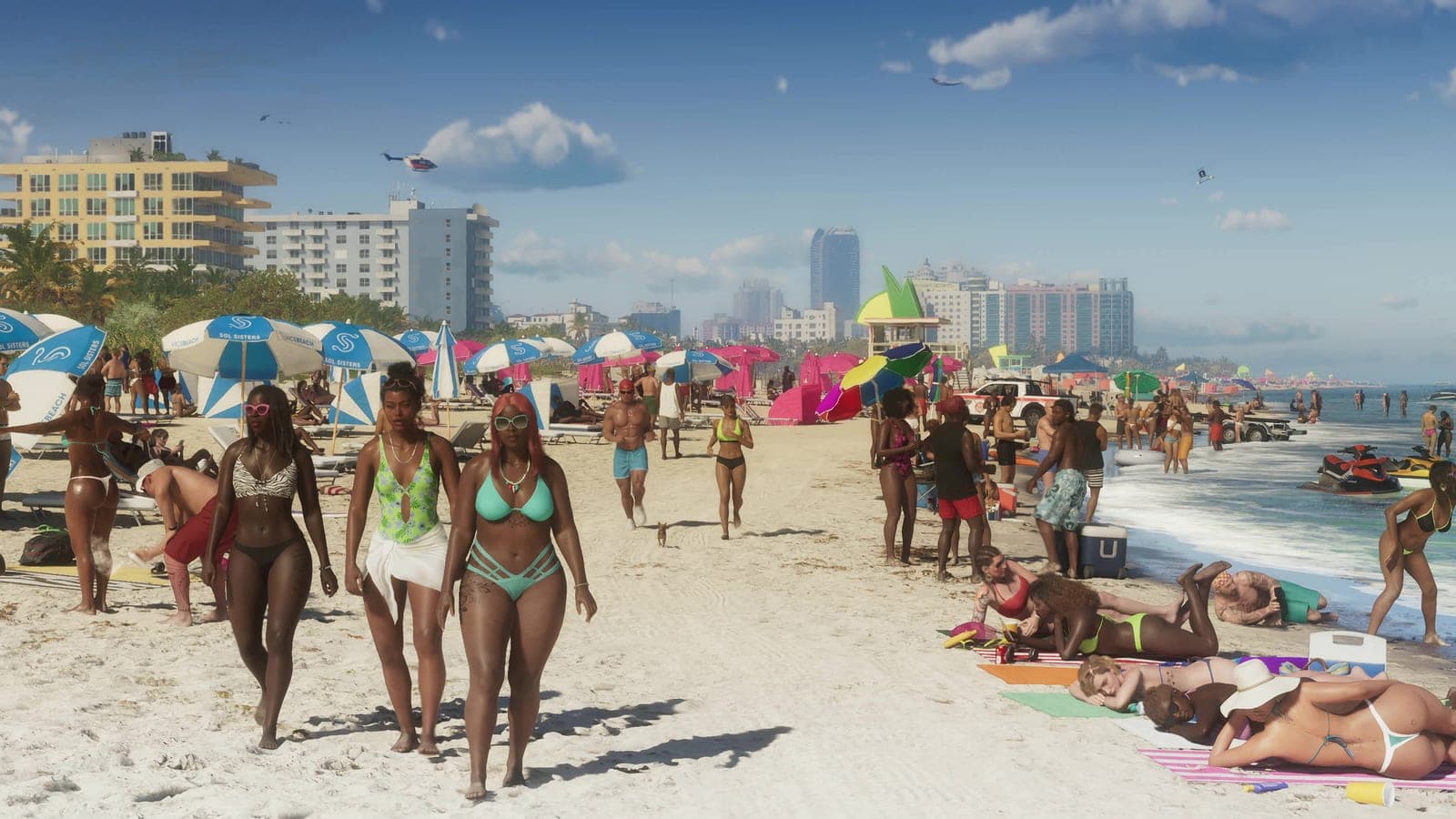
Rockstar's claim about Grand Theft Auto VI's world is that the people in it were made rather than generated. More than 50 real street artists were commissioned to paint Vice City's murals. An office in Los Angeles works on almost nothing but pedestrians. The studio has more than doubled in size since Red Dead Redemption 2, and the reason it gives is the density of this one.
Almost all of that is a statement about how the game was built, not about what it does when you are holding the controller. That gap is the subject of this piece.
Some of it does resolve into mechanics — NPCs that escalate instead of fleeing, populations that differ by region, an interaction system Rockstar describes as returning and evolved. The rest is production scale, and production scale is the easiest thing in games to describe and the hardest to feel.
The staffing is the strongest evidence, and it is still not a feature
Rockstar employed somewhere near 2,000 people when Red Dead Redemption 2 shipped in 2018. It sits at roughly 4,000 now, and the studio's own explanation for the difference is VI. Within that, one detail is unusually specific: a Rockstar office in Los Angeles is dedicated almost solely to the game's pedestrian population.
Aaron Garbut, co-studio head at Rockstar North, described that team to the New York Times as writers, directors and producers assembled to work on non-player characters and nothing else. His summary of the approach was blunt:
We art-directed each individual one of them.
The same interview produced the most quoted description of the world:
Every room in the game, somebody thought about this. Who's sitting where, what they're drinking, the marks that are left on the table. The pictures on the wall will have the people that are in that room, with their tattoos on their arms and their family behind them.
Take that as what it is. It is a description of a production method — hand placement instead of procedural generation — from the person responsible for the method, made before anyone outside Rockstar has spent an hour in the world. Hand-crafting a room does not by itself make the room do anything, and Garbut did not claim it does.
The same is true of the rest of the hiring, which by now runs to a small list: the 50-plus street artists, the professional racing drivers on the vehicle handling team, and a Miami stylist, Jillian Carr, brought in during 2023 to build the game's fashion ecosystem. Rockstar has also said its research included over ten years of visits to Miami and a research team based in the city. Rupert Humphries, its senior vice president of narrative, put the method plainly:
We will meet with ex-criminals, law enforcement, club promoters, gun dealers and anyone notorious or influential who'll take our calls.
That is how you build a convincing city. It is not, on its own, evidence that the city responds to you.
The one number Rockstar has published
The exception to all of that is a figure, and it is the single most concrete thing available about VI's crowds. Rockstar told the New York Times that the game contains well over 600,000 animations, against 55,000 in GTA V and 300,000 in Red Dead Redemption 2.
| Game | Animations | Multiple of GTA V |
|---|---|---|
| GTA V (2013) | 55,000 | 1× |
| Red Dead Redemption 2 (2018) | 300,000 | ~5.5× |
| GTA VI | over 600,000 | over 10× |
Two things are worth saying about that table, in order.
The first is that it is a real number from a named studio head in a named publication, which puts it several categories above most of what circulates about this game.
The second is that an animation count measures assets, not behaviour. Six hundred thousand animations could be one crowd with an enormous vocabulary of idle gestures, or it could be a system that picks between them intelligently. Nothing in the figure distinguishes those, and Rockstar has published no equivalent number for anything that would — no NPC count, no crowd density figure, no measure of how many distinct routines exist. The animation number is the most-cited statistic about VI's world precisely because it is the only one.
What actually varies, in Rockstar's own terms
Ahead of the Extended Look, Rockstar published a description of the population that is more useful than the headline figure, because it names the axes rather than the total. It said new tools and production pipelines were built to create the most detailed and varied character population the studio has made, and that the variety shows up in clothing, body types, animations, routines, and how crowds are placed across locations.
The individual-level variety it lists is granular: age, height, build, tattoos, piercings, visible cosmetic surgery. That is a longer list than GTA V, where a handful of body archetypes were reskinned across an entire county, and it is the part of the claim most likely to be immediately visible.
The location-level claim is the more interesting one. Rockstar has said the population is designed to differ by where you are — that residents of Little Cuba look and dress unlike the people you meet in the wilderness around Mount Kalaga, and that crowds on the beaches are not the same population as pedestrians walking through elsewhere. If that holds, it is a structural change rather than a cosmetic one: it means the game carries several designed populations rather than one pool sampled everywhere.
It has not been demonstrated. The Extended Look moved through several regions, and nobody outside Rockstar has been able to stand in two of them long enough to compare crowds.
NPCs that escalate instead of resuming
The behavioural claims are narrower than the production claims, and they are the ones with a stated mechanic behind them.
Rob Nelson, head of development at Rockstar North, has said the NPC interaction system from Red Dead Redemption 2 is returning and evolved — the greet-and-antagonise interaction that let Arthur Morgan defuse or provoke a stranger — and that VI takes it much further. Rockstar pushed that system as far as it could in 2018, in Nelson's framing, and this is the sequel to it rather than a new idea.
The consequence Rockstar has actually described is a reversal of the default. In GTA V a pedestrian you shoved either ignored it or ran. In VI, an NPC who notices you crowding them may become aggressive rather than fleeing, and personality is said to determine which — whether someone backs off, confronts you, or produces a weapon. Nelson has also indicated that threatening an NPC without firing can keep a situation from turning violent, which puts NPC reaction on the same axis as the lethal and non-lethal options in combat.
This connects to two systems covered elsewhere on the site, and it is worth keeping them distinct. Pedestrians commenting on what you wear is part of the appearance layer. Police identifying you by face, clothing and vehicle is part of the wanted and criminal profile system. Neither is the same as an ordinary NPC remembering you, and the difference matters — see below.
The murals are the most literal version of the claim
Of everything in this article, the street art is the piece that needs the least qualification, because it is not a system at all. Rockstar commissioned more than 50 real street artists to produce the murals in the game, concentrated in places like the Stockyard, Vice City's rendering of Wynwood — a district whose real-world identity is substantially built on its walls.
There is no mechanic here and there does not need to be one. It is set dressing that was made by the people who make that kind of set dressing in the real place, which is a coherent answer to the question of how you build a neighbourhood defined by its art without producing pastiche.
What has not been said is anything about how it works in play: whether murals are static, whether they change over the course of the game, whether any artist is credited in-game, and whether the work extends past Vice City into the rest of Leonida.
What comes from the leaks, not from Rockstar
World density is the subject where leak material and official material have blurred together most thoroughly, and three claims in particular are being repeated as though Rockstar said them.
Persistent NPC memory. The claim that pedestrians remember you hours later, and treat you differently on a second encounter, is everywhere. It does not come from Rockstar. Its traceable origin is Reddit posts attributed to a former employee, and coverage of them has quietly rounded up to "confirmed" through repetition. Red Dead Redemption 2 did have a limited version of this, which is what makes the claim plausible and also what makes it easy to assert without evidence. Rockstar has described NPCs reacting; it has not described them remembering.
Hundreds of thousands of ambient dialogue lines. A widely circulated claim describes a tagged dialogue system that tracks which lines you have heard and routes to rarer ones, plus figures like 35,000 additional recorded lines and 300-plus voice actors. The sourcing is a Reddit post citing someone close to SAG-AFTRA. Rockstar has neither confirmed nor denied any of it.
The beach crowd footage. Leaked material published in August, covered by Kotaku among others, appears to show extremely dense and varied crowds on a beach. Kotaku reporting on a leak is reputable coverage of unverified material, not verification — and even genuine footage may come from a build that does not ship. The December 2023 trailer's beach scene is official and shows something similar, which is the version worth pointing at.
Confirmed, or not
| Claim | Status |
|---|---|
| New tools and pipelines built for the most detailed and varied character population Rockstar has made | Confirmed by Rockstar |
| Variety in age, height, body type, tattoos, piercings, cosmetic surgery and clothing | Confirmed by Rockstar |
| Populations differ by region — Little Cuba unlike Mount Kalaga | Confirmed by Rockstar |
| Crowd placement differs by location | Confirmed by Rockstar |
| Well over 600,000 animations, against 55,000 in GTA V and 300,000 in RDR2 | Confirmed by Aaron Garbut to the New York Times |
| NPCs hand-placed and art-directed rather than procedurally generated | Confirmed by Aaron Garbut |
| An LA office dedicated almost solely to pedestrians | Confirmed by Rockstar |
| Team more than doubled since RDR2, roughly 4,000 people | Confirmed by Rockstar |
| Over 50 real street artists commissioned for the murals | Confirmed by Rockstar |
| A Miami stylist hired in 2023 to build the fashion ecosystem | Confirmed by Rockstar |
| RDR2's NPC interaction system returning and evolved | Confirmed by Rob Nelson |
| NPCs may become aggressive rather than fleeing | Confirmed by Rob Nelson |
| Threatening without firing can defuse a situation | Confirmed by Rob Nelson |
| Any NPC count, crowd density figure or routine count | Not published |
| Whether murals change, or extend beyond Vice City | Not described |
| Persistent NPC memory across a playthrough | Leak and rumour only — unconfirmed |
| A tagged ambient dialogue system, 35,000 extra lines, 300+ actors | Leak material only — unconfirmed |
| Dense beach crowds in leaked footage | Unverified material from an unfinished build |
What is still not confirmed
Whether density is a system or a setting. Every confirmed statement describes how many different people exist and how carefully each was made. None describes how many are on screen, how far they persist when you turn around, or whether a crowd disperses and reforms the way GTA V's did. A city can be populated by 600,000 animations and still empty out behind you.
Whether NPCs remember anything. This is the load-bearing question under the phrase "lived-in", and it is unanswered. Rockstar has confirmed that police identify you by attributes during a chase, and that NPCs react to what you wear and carry. It has not said that an ordinary pedestrian retains anything about you after you walk away. Everyone telling you the city remembers you is quoting a Reddit post.
What the routines actually are. Rockstar has used the word — differences in routines across the population — without describing one. Whether NPCs have daily schedules, homes, jobs they travel to, or simply longer and more varied ambient loops than GTA V's has not been said, and those are very different games.
Whether it holds at speed. Every crowd in every showcase has been walked through. Nobody has seen what Vice City's beaches look like from a car at 90mph, which is the condition most players will experience most of them under, and which is where density budgets historically go first.
What it costs. Reporting from Kotaku's coverage of a Nelson interview indicates the console builds are currently running at 30fps, with no commitment to a 60fps mode at launch or afterwards. Rockstar has not published a target, and the relationship between that and crowd density is exactly the sort of trade nobody discusses before release. Treat the frame rate as unsettled rather than announced.
Whether any of it registers. This is the one no preview can answer. Red Dead Redemption 2 had the most detailed ambient population ever built at the time, and the common complaint about it was still that the towns felt like a diorama. Detail per NPC and the feeling of a place being alive are related and not the same thing, and which one VI delivers will not be known until launch on 19 November 2026.
We will update this page as Rockstar confirms things, and again after launch. In the meantime, see the map of Leonida, how big that map actually is, what the Extended Look showed, how the criminal profile works, or the interactive map itself.
Read next
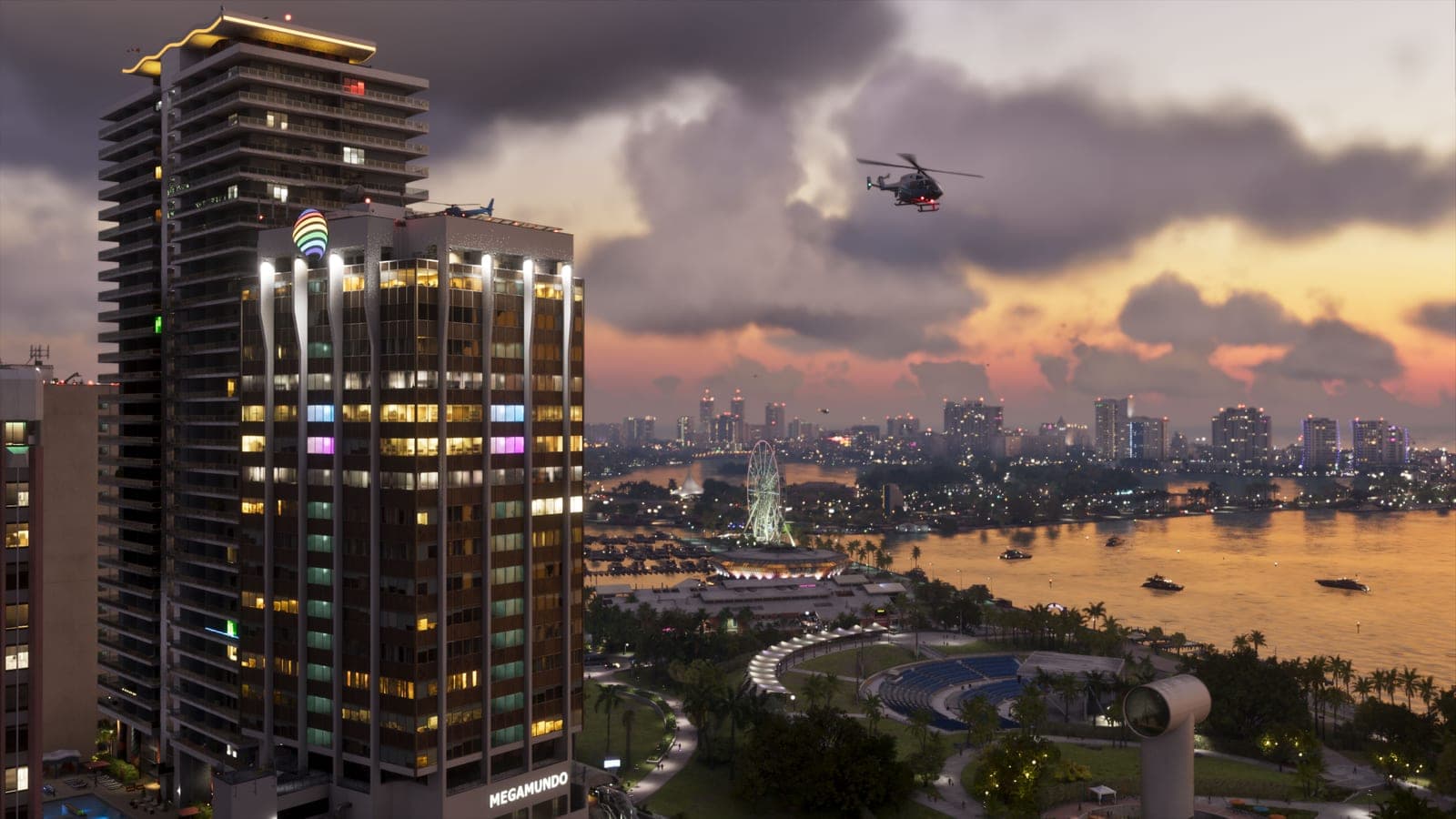
The Rockstar tribunal: what a Glasgow courtroom has revealed about GTA 6
Rockstar dismissed 34 staff across its UK and Canadian studios on 30 October 2025. Thirty-one of them are now in front of an employment tribunal in Glasgow that runs until mid-October, and Rockstar's own filings have become the first place the studio has ever referred to a GTA VI online format.
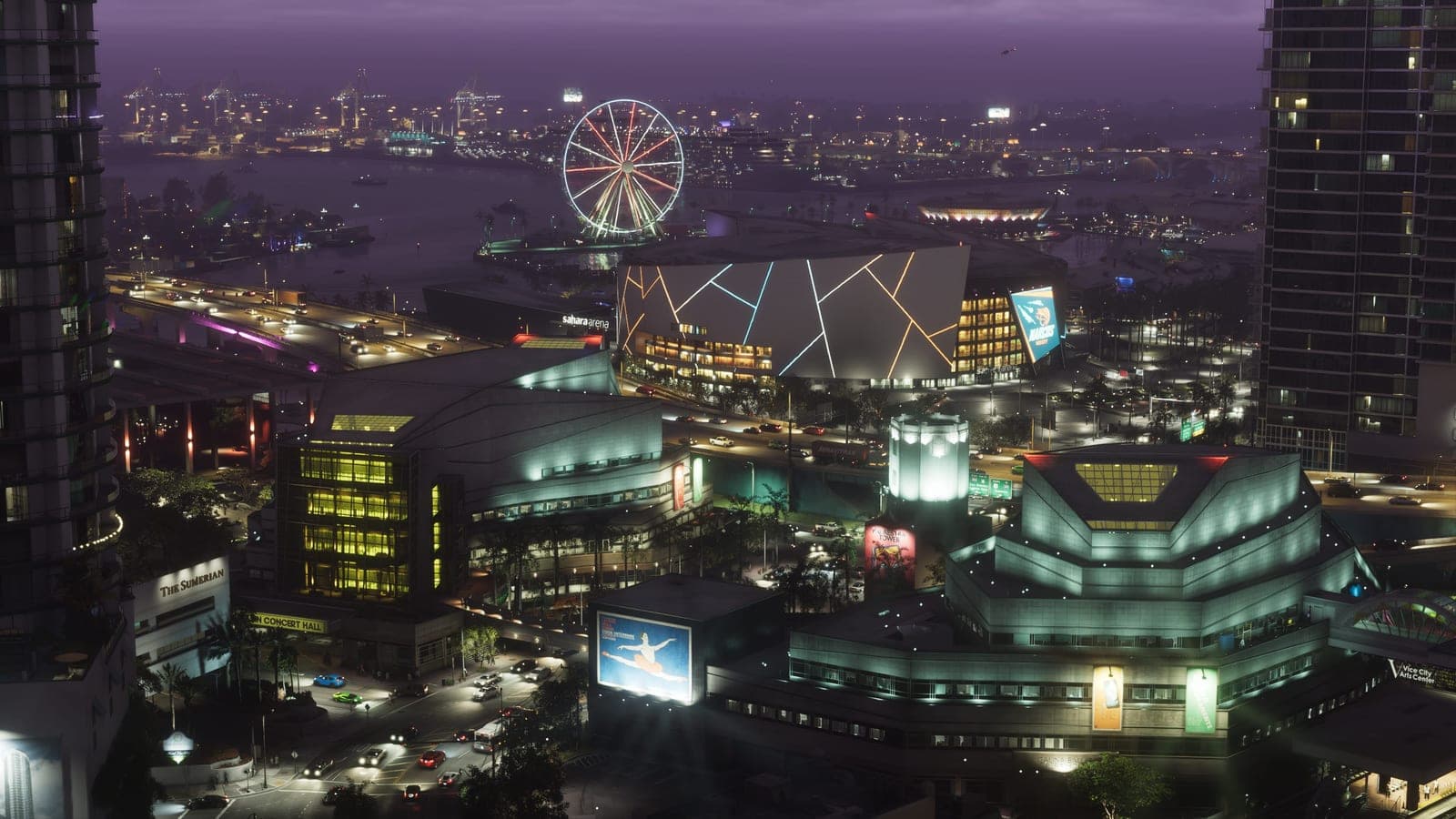
Miami is being turned into Vice City: the rooftop sign, the beach deal, and who signed them
A helicopter lifted WELCOME TO VICE CITY onto the roof of the Miami Heat's arena on 22 September. Miami-Dade County is collecting $975,000 for it, Miami Beach has voted 4-3 to take at least $3 million more, and Rockstar has said nothing publicly about either. Here is what the public records actually show.
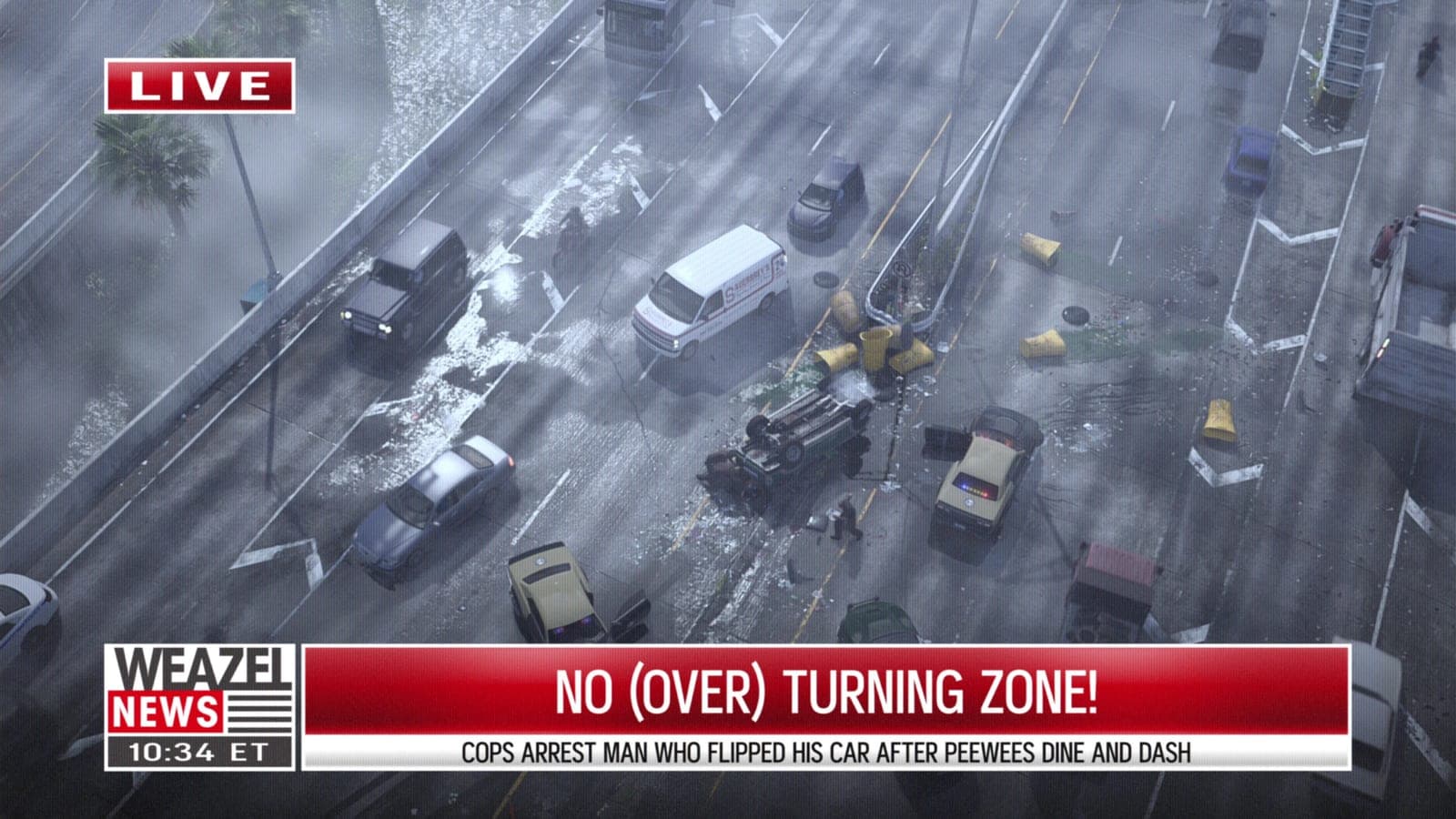
GTA 6 police and wanted levels: six stars, heat icons, and what the cops know about you
Six wanted stars are back, and underneath them sits a row of icons showing exactly what the police have on you — your face, your clothes, your car, your partner, the CCTV. Here is how the heat system works in Grand Theft Auto VI, and what Rockstar still has not said.