GTA 6 police and wanted levels: six stars, heat icons, and what the cops know about you
Six wanted stars are back, and underneath them sits a row of icons showing exactly what the police have on you — your face, your clothes, your car, your partner, the CCTV. Here is how the heat system works in Grand Theft Auto VI, and what Rockstar still has not said.
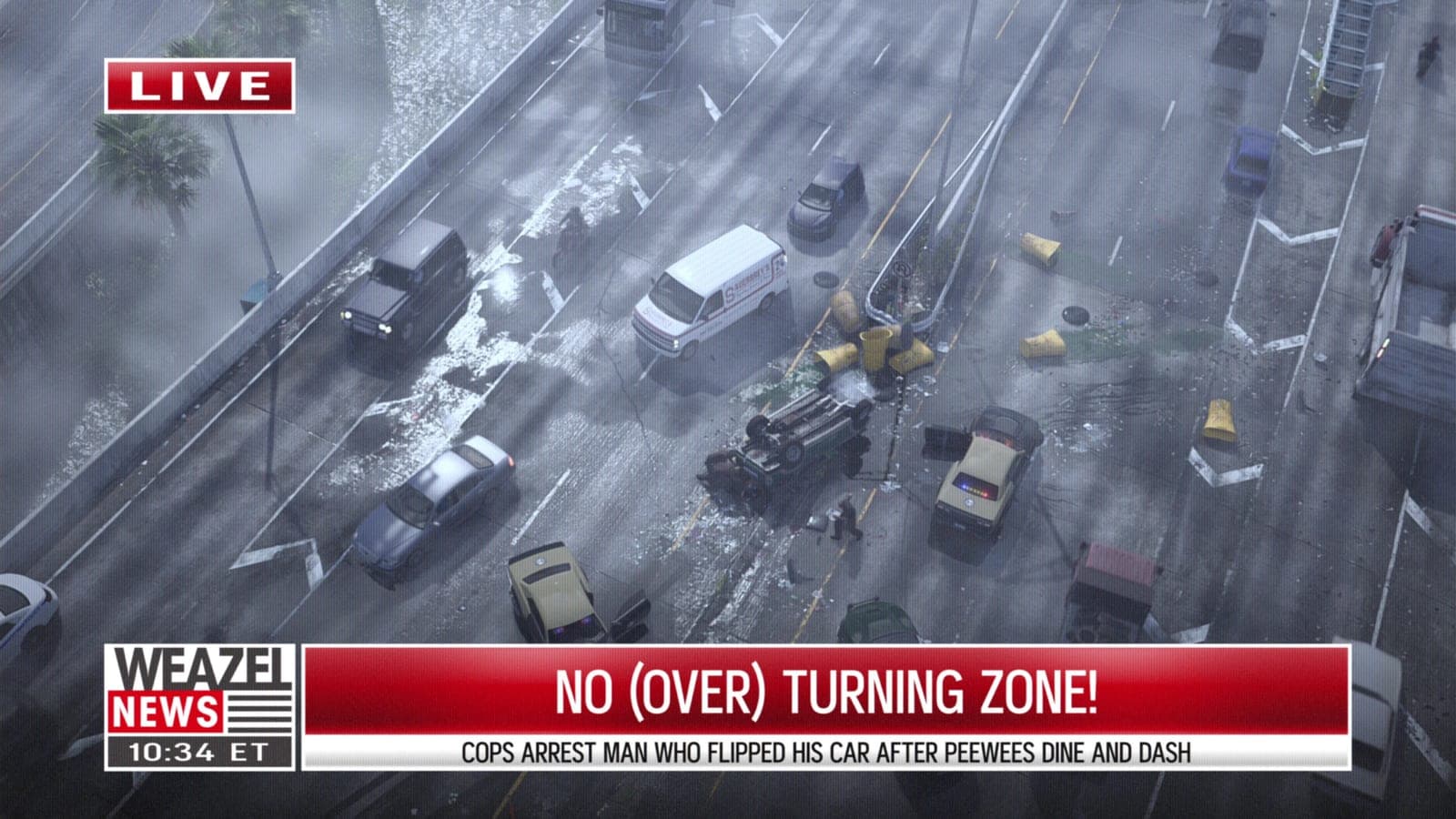
Grand Theft Auto VI runs two meters on you at once, and only one of them is the stars. The wanted level returns to six, which is the headline. The part that changes how a chase is played is the row of small icons sitting underneath it, each one standing for a specific thing the police have learned about you — your face, the clothes you are wearing, the car you left in, the fact that there were two of you, the camera that filmed it.
Rockstar calls that layer heat, and it is the difference between a wanted level you escape by driving fast and one you escape by becoming a different-looking person in a different car.
This piece sets out what the Extended Look showed on screen, what Rob Nelson has said on the record about how the system is meant to work, which parts come from the press and creator preview round rather than from Rockstar directly, and the large list of things nobody has answered.
Six stars, and why that number matters
The wanted meter in VI goes to six. That was visible in the Extended Look footage Rockstar premiered on 27 August 2026, and it is a straightforward reversal: six was the ceiling in every Grand Theft Auto before GTA V, which cut it to five in 2013.
Be careful about what the number itself promises. In the older games six stars was shorthand for the army turning up, and Rockstar has described no equivalent escalation for VI — no agency list, no statement about what appears at five that does not appear at four. Six stars is a confirmed ceiling, not a confirmed set of consequences.
The heat icons are the actual system
Beneath the stars sits a row of indicators, and each one names a piece of information the police are working from. Reporting from the preview round — GameSpot's write-up is the clearest — describes the set as follows.
| Icon | What it means | How you address it |
|---|---|---|
| CCTV camera | You were caught on a security camera | Destroy the footage |
| Two figures | Police have seen Jason and Lucia together | Split up |
| Clothing | Your outfit is in the description | Change clothes |
| Face | Your appearance has been identified | Cover it, or stay out of sight |
| Vehicle | The getaway car is known | Swap it |
| Weapon | The gun you used has been reported | Put it away |
The consequence is that shaking a pursuit is no longer one action. In GTA V, escape was a distance-and-time problem: break the search cones, wait out the timer, done. In VI each icon is a separate thread that has to be cut, and cutting some of them requires facilities — a clothing store, another vehicle, a camera you can get back to.
This is the same mechanic visible in the Raul Bautista getaway, where burning the car and switching to a van is the system being played rather than a scripted beat.
What the star colours mean
The stars themselves carry state as well as count. As described in preview coverage:
- Hollow stars — police have been dispatched, but they do not know who they are looking for.
- Solid white — they have direct line of sight on you.
- Flashing — you have broken line of sight.
- Solid red — you are still inside the area they are searching, and they do not know where.
Treat the fine detail here with some caution. The four states are consistently reported, but write-ups differ on exactly where the line between flashing and solid red falls, and none of them is quoting a Rockstar document. The states are real; the precise semantics are a reading of footage.
Heat is geography, not a timer
The most substantial thing Nelson has added to this came in Rockstar's interview with the Japanese magazine Famitsu, and it reframes escape as a question of where you are rather than how long you wait.
Police search a heat area. While you remain inside it, the heat does not go away. Get outside it and the officers pursuing you drop off. Leaving the area is therefore one method of escape in its own right — and at the top of the meter, that area is reported to spread far enough across Leonida that leaving it is not a short drive.
Two riders on that, both from Nelson. First, getting clear of the area does not clear what the police know: get back into a vehicle that has already been identified and you can be spotted again, which is the vehicle icon outliving the chase that produced it. Second, the clothing thread has a specific answer — change clothes in a clothing store and disguise yourself, and you no longer match the description that went out.
That last one is the clearest statement anyone at Rockstar has made about how the heat icons are actually cleared, and it is worth noticing what it implies: some of these threads are cut inside shops and interiors, which makes the map itself part of the escape.
Nelson's reasoning, in his words
The design intent has been stated plainly, and it is a direct criticism of how the series used to work:
We wanted to get past that thing we used to have where you could lose the cops instantaneously, and then they forget about you instantly. And we wanted them to have a bit more persistent memory.
Asked whether that makes the game harder, he did not deny it:
It can be harder, but it's fun, depending on the wanted level. You have to think more. You can't just play the game and avoid their little vision cones anymore.
The phrase vision cones is the admission underneath the quote. GTA V's police search was a legible geometry that a player learned to read and then defeat mechanically, and Nelson is describing its removal as the point rather than as a side effect.
The minimap change, and what is carrying it
The piece of this most likely to change how a chase feels moment to moment comes from the creator preview round rather than from Rockstar's own materials, and it should be labelled that way.
Police are reported to no longer appear on the minimap at all. In place of the constant radar feed, previewers describe the Focus ability as the intended replacement — it reveals officers through walls when you use it, which turns tracking the police into something you do actively instead of something you read off the corner of the screen. The search zone itself is described as a red area on the minimap with a lighter ring outside it.
Two cautions. This comes from creators writing up a hands-off session at Rockstar North, not from a Rockstar statement, and Focus as a named ability has been shown officially only in its combat form — the slow-motion aiming state with red and yellow body targeting. Whether it is one ability with two uses, whether it depletes, and whether it can be held during a pursuit are unanswered.
How this fits the rest of VI
Two systems already covered on this site meet the police system, and it is worth keeping them apart.
The criminal profile is not the wanted level. The profile is the long clock — it accumulates across a playthrough and does not reset, and it tracks what kind of criminal you are rather than what the police currently know. Heat is the short clock: it exists for the duration of an incident and is designed to be cleared. Conflating the two is the most common error in coverage of either.
The anticipatory side of policing is also confirmed and separate: walking a street with a rifle drawn attracts attention in VI, and an NPC who sees you armed may call the police before you have done anything at all. That is heat being generated rather than escaped.
One footnote on the leaked material. Among the August leak claims about driving was a system of highway traffic cameras that flag a stolen car inside a marked zone which then clears when you leave it. The zone-based structure now has an on-the-record analogue in the heat area; that makes the leak claim look plausible and does not make it confirmed. Plausibility is not evidence, and it never was.
Confirmed, or not
| Claim | Status |
|---|---|
| The wanted meter goes to six stars | Shown in the Extended Look |
| Icons beneath the stars show what police know | Shown in the Extended Look |
| Police identify you by face, clothing and vehicle | Confirmed by Rockstar |
| Being seen as a pair registers separately | Confirmed by Rockstar |
| CCTV footage feeds identification and can be destroyed | Preview reporting |
| Police have "more persistent memory" by design | Confirmed by Rob Nelson |
| A heat area you can escape by leaving it | Confirmed by Rob Nelson |
| Re-entering an identified vehicle can give you away again | Confirmed by Rob Nelson |
| Changing clothes in a shop clears the clothing description | Confirmed by Rob Nelson |
| Hollow, white, flashing and red star states | Preview reporting — the exact semantics are a reading of footage |
| Police absent from the minimap, with Focus as the replacement | Preview reporting, not a Rockstar statement |
| The heat area spreading across the whole map at maximum | Preview reporting — no Rockstar figure |
| What appears at each individual star level | Not described by anyone |
| Traffic cameras applying a wanted level in a zone | Leak material only — unconfirmed |
What is still not confirmed
What escalation looks like. Six stars is a number on a meter. Which units arrive at which level, whether there is a NOOSE or military equivalent at the top, and whether the sixth star is qualitatively different from the fifth have not been described. Every list you have read matching star levels to agencies is invention.
Whether heat survives an incident. Nelson's persistent memory is stated as a design aim, and the vehicle example shows it outliving one chase. Whether an identification expires, whether it survives a save and reload, and whether a car stays flagged for the rest of the game are all open.
Whether you can clear icons mid-chase. Changing clothes is described as something you do in a clothing store. Whether there is any way to drop a description while actively pursued — a mask pulled up, a jacket taken off, an interior you can duck into — has not been shown.
What happens when they catch you. Arrest, hospital, bail, weapon confiscation, and whether being caught costs you anything beyond a respawn are entirely unaddressed. In GTA V it was a fee and a lost weapon; nobody has said what it is in VI.
Whether wanted levels can be bought off. GTA Online's answer was a phone call to a contact. Rockstar has not said whether VI has any equivalent, which matters more than it sounds — a purchasable escape would undercut the whole identification system.
How any of it works in Online. Everything above concerns the single-player game. Rockstar has published nothing about the multiplayer wanted system, and a heat model built around disguises and vehicle identity raises obvious questions in a lobby full of other players.
Whether it holds up over a hundred hours. This is the one that cannot be settled before 19 November 2026. A chase that requires thought is better than one that requires distance, right up until the fourth time you drive to the same clothing store. Whether the heat system stays interesting or becomes an errand is a question about repetition, and no showcase can answer it.
We will update this page as Rockstar confirms things, and again after launch. In the meantime, see what the Extended Look showed, how the criminal profile works, what combat looks like, or the map of Leonida as it fills in.
Read next
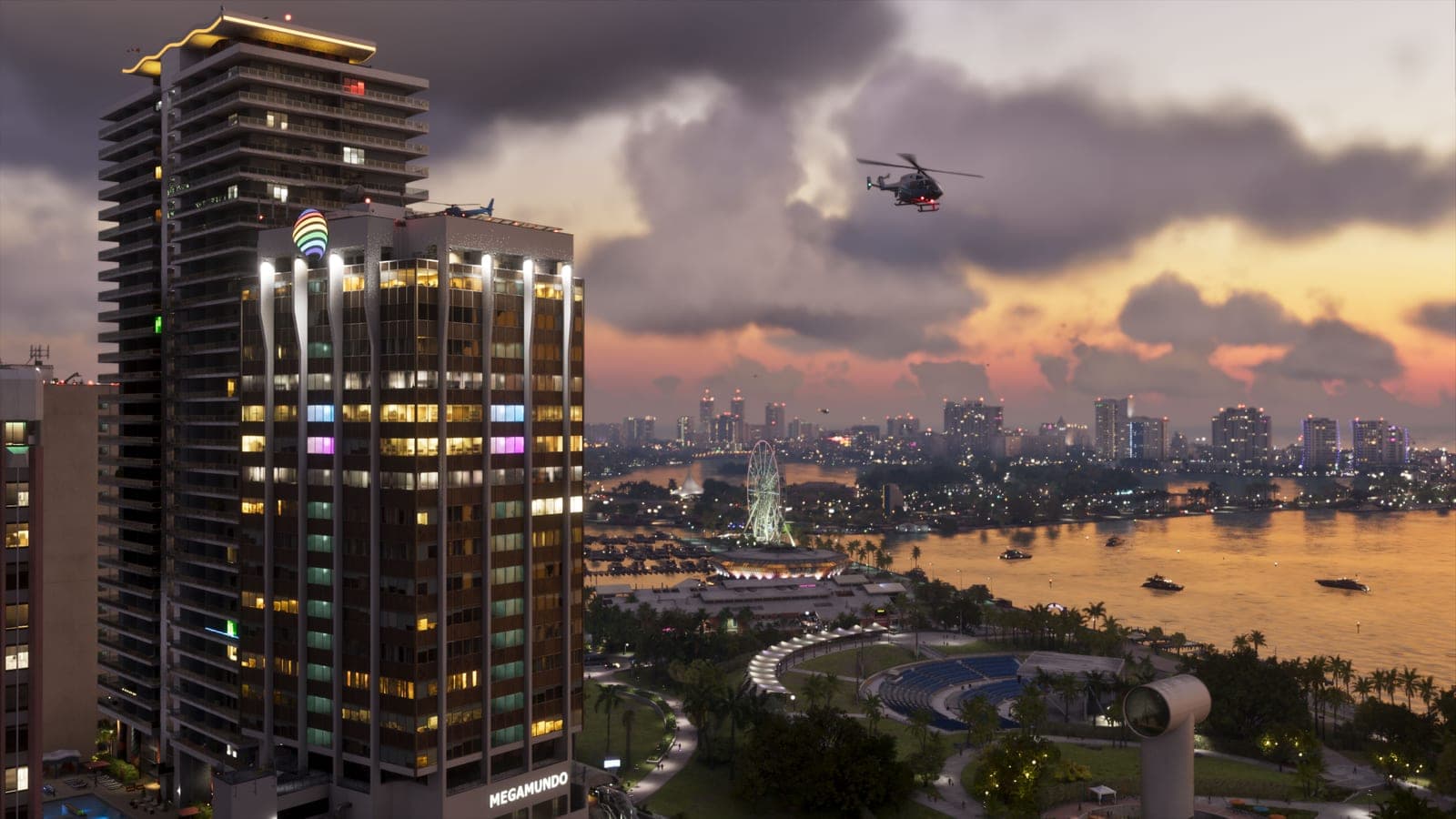
The Rockstar tribunal: what a Glasgow courtroom has revealed about GTA 6
Rockstar dismissed 34 staff across its UK and Canadian studios on 30 October 2025. Thirty-one of them are now in front of an employment tribunal in Glasgow that runs until mid-October, and Rockstar's own filings have become the first place the studio has ever referred to a GTA VI online format.
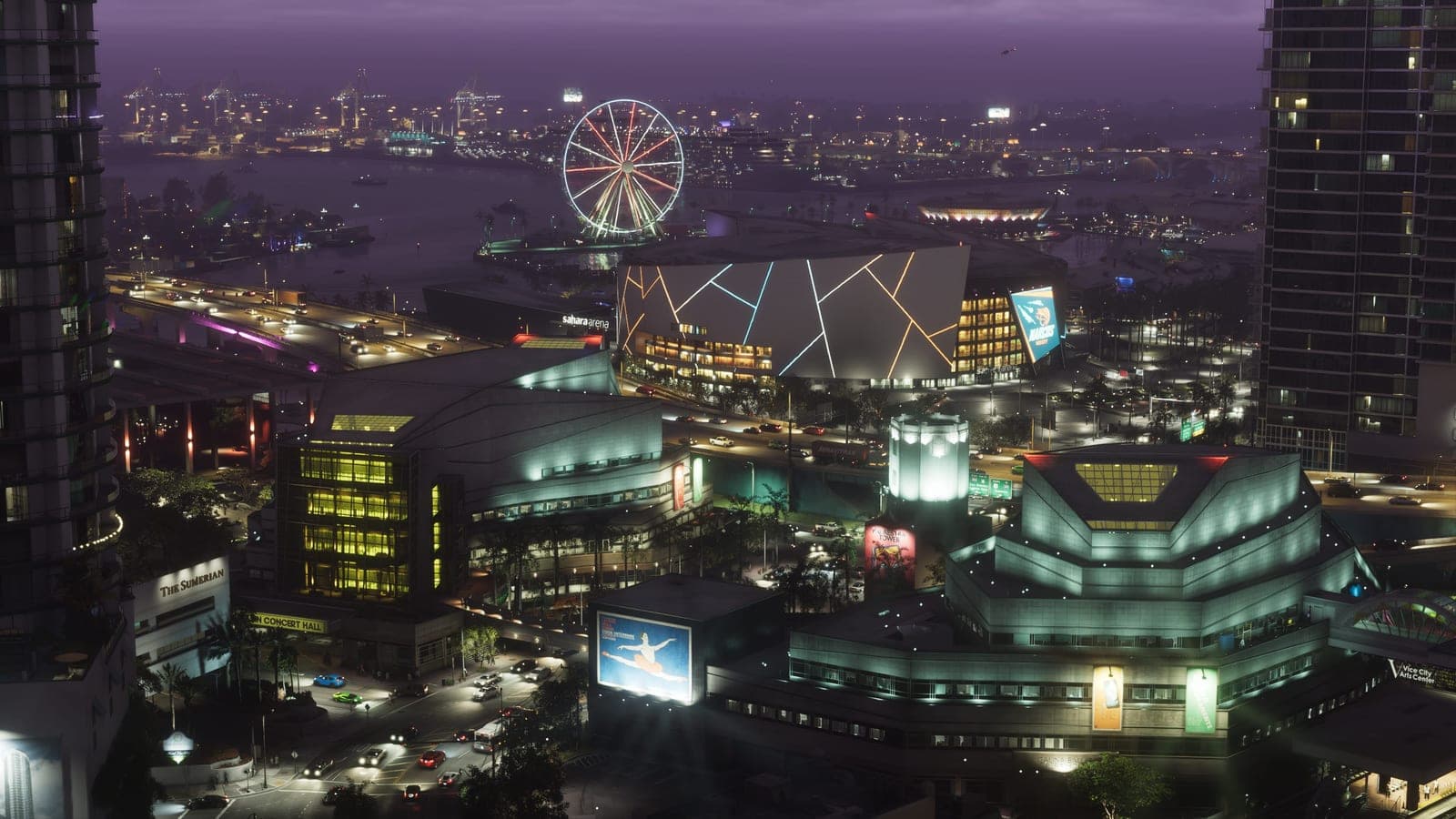
Miami is being turned into Vice City: the rooftop sign, the beach deal, and who signed them
A helicopter lifted WELCOME TO VICE CITY onto the roof of the Miami Heat's arena on 22 September. Miami-Dade County is collecting $975,000 for it, Miami Beach has voted 4-3 to take at least $3 million more, and Rockstar has said nothing publicly about either. Here is what the public records actually show.
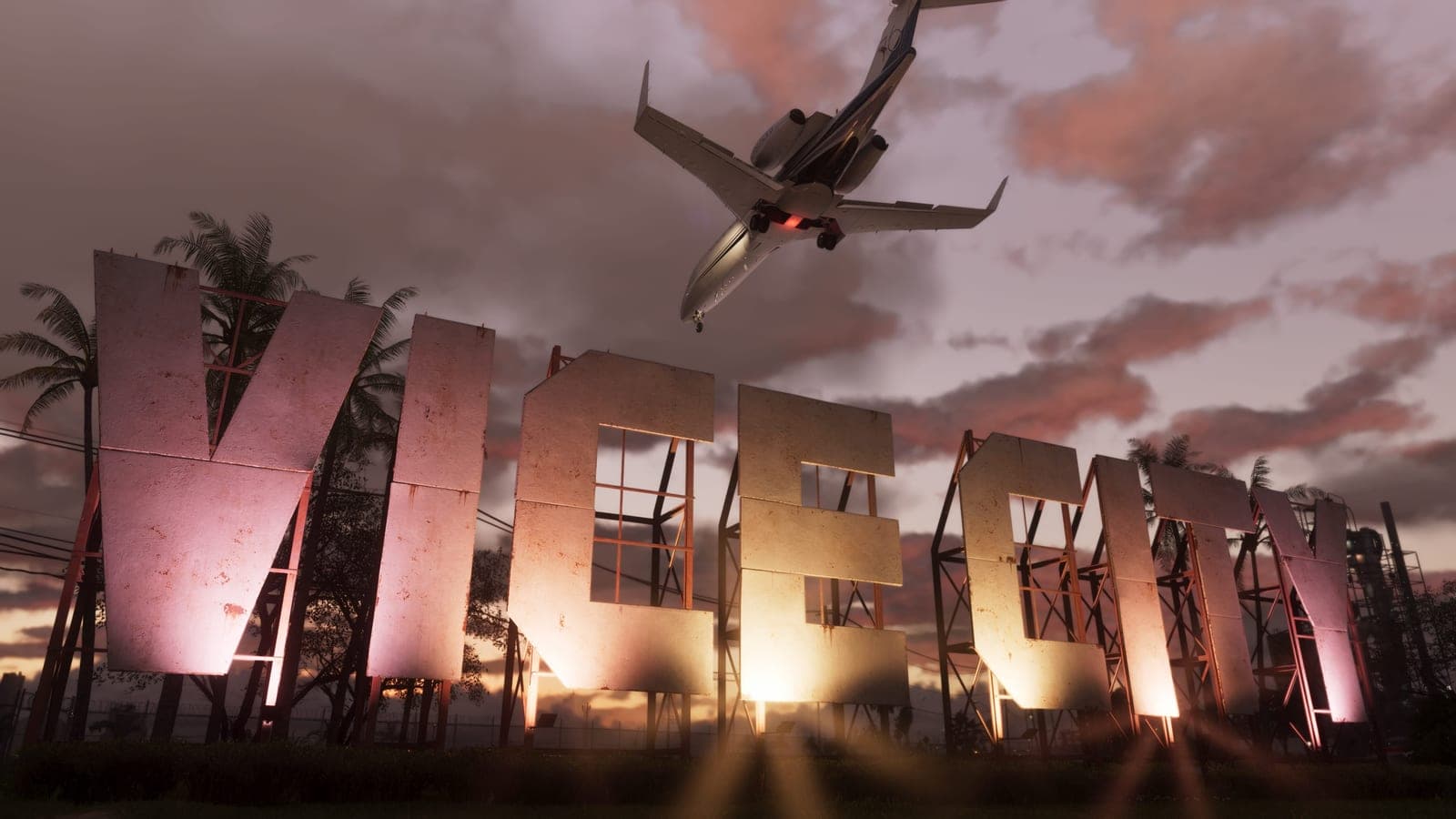
Rockstar's mod guidelines: what the new rules ban, and what they change for GTA 6
Rockstar has published a company-wide modding policy that forbids fan-made story expansions, cross-game map merges and unofficial ports, and limits multiplayer modding to one licensed platform. It covers Grand Theft Auto VI — a game with no PC version announced.