GTA 6 consequences: the criminal profile, and what Rockstar has actually shown of it
Rockstar says choices in Grand Theft Auto VI carry repercussions cutting deeper than any honour system it has built. Here is the criminal profile, the wanted system that identifies you, the relationship that cannot break, and how much of it is still only a promise.
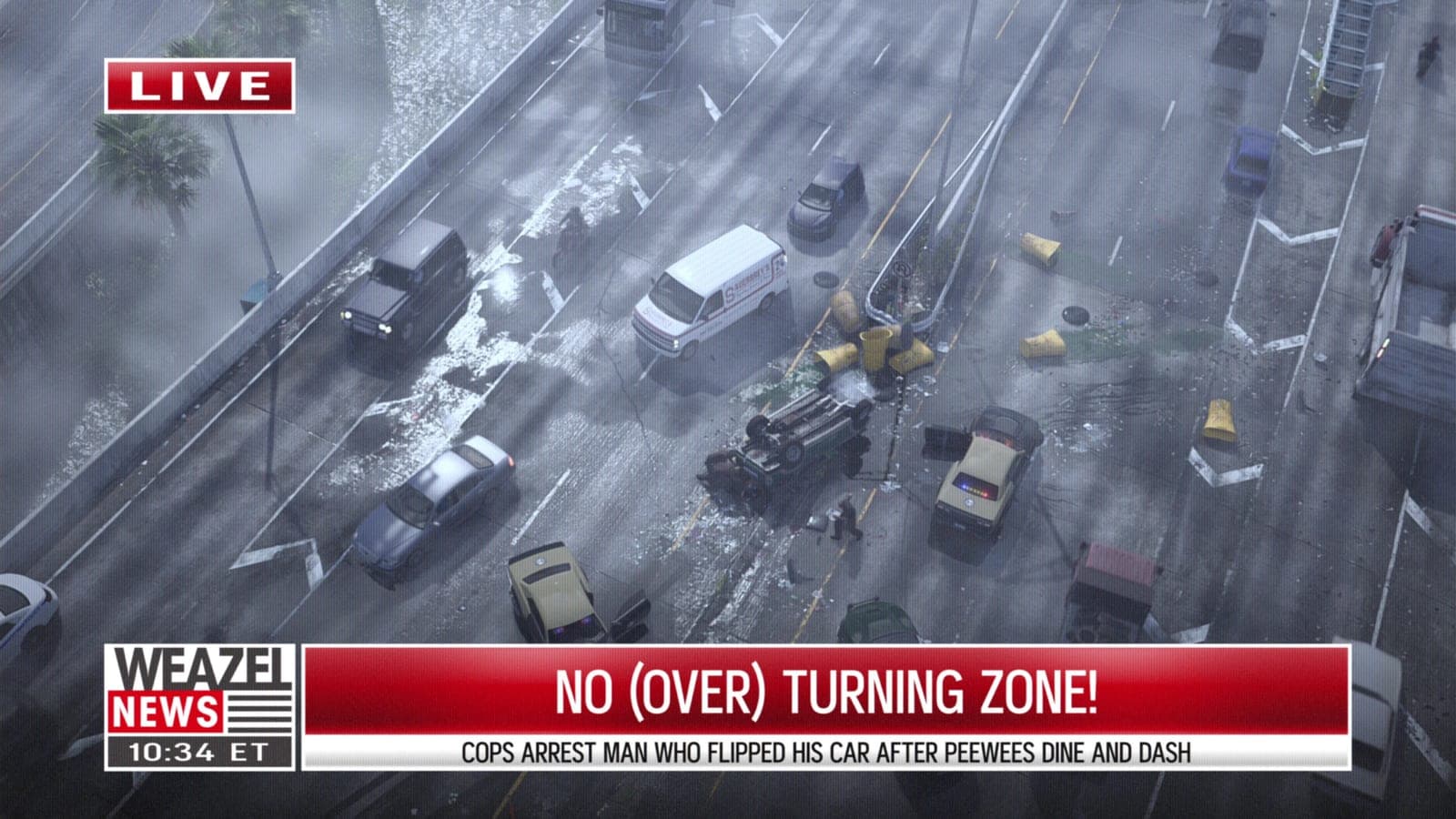
Rockstar's central claim about Grand Theft Auto VI is that what you do sticks. In the details it published ahead of the Extended Look, the studio said player actions now have consequences in the world, and that choices carry repercussions cutting much deeper than its previous titles or honour systems.
That is a claim about a game nobody outside Rockstar has played. It is also the most consequential claim being made about VI, because it is the one that decides whether the open world remembers you or resets you.
This piece separates three things that are constantly run together: what Rockstar has promised, what it has named, and the one moment any of it has appeared on screen.
The promise is a design goal, not a demonstrated feature
Rob Nelson, head of development at Rockstar North, has framed the whole thing as a question put to the player rather than a mechanic delivered to them:
You can still cause as much carnage as you can imagine. How does that make you feel if it has an impact on certain things? Do you still want to do it? Do you want to do it more? Do you want to do it less? Do you care at all? It's up to you and what matters to you.
Asked what he is most proud of, Nelson pointed at the interlocking of it — a lot of complicated systems working together until, in his words, you can forget it is a game.
Take that for what it is. It is a statement of intent from the person responsible for the intent, made eleven weeks before anybody can check it. Every previous Rockstar game has been described this way before release, and one of them shipped an honour system that mostly adjusted shop prices.
The criminal profile is the named system
The criminal profile is Rockstar's own name for the thing that tracks you, and its subject is narrower than Red Dead Redemption 2's honour. Honour asked whether Arthur Morgan was a good man. The criminal profile asks what kind of criminal Jason and Lucia are, which is a question with no virtuous answer available.
Nelson has been specific about what moves it, and the distinction he draws is between necessary violence and the other kind:
It's when you go beyond what is necessary on a consistent basis, or you do completely unnecessary stuff consistently, that you may start to sway your criminal profile in a certain direction.
His worked example is the reassuring one. Hit a shop, take the money, leave before the police arrive, do not start shooting — and you are generally fine. Escalation is available, and Nelson is explicit that you can absolutely do it if you want to. The system is not a leash; it is a record.
Two properties separate it from anything the series has had before.
It does not clear. A wanted level is a state you escape. The criminal profile accumulates over a playthrough and is not wiped back to zero the way stars are. Those are two different clocks running on the same behaviour, and conflating them is the most common error in coverage of this system.
Jason and Lucia have one each. The profile belongs to the protagonist, not to the save file, and each drifts according to what you did while playing as them. One can be a professional while the other is not.
There is also a settings-level detail worth knowing: notifications about your profile changing can be switched off. That is a small thing that says something larger — Rockstar expects some players to want the system running silently rather than reporting on them.
Four names, and a fifth nobody has named
Preview coverage has reported a ladder of profile states, running from Professional at the top down through Aggressive, Violent and Psycho. GameSpot has additionally reported a fifth state, unnamed, described as hard to reach and as a point of no return once you get there.
Be careful with how much weight that carries. The state names come from the preview round rather than from anything Rockstar has published, and the fifth state is reported in the conditional — it is said to be a point of no return, not stated to be one by anyone at Rockstar on the record. Descriptions circulating elsewhere of a profile icon that visibly cracks and then shatters are more specific still, and none of the sites carrying them says where the detail came from. Treat the ladder as reported, the fifth rung as unverified, and the shattering icon as unsourced.
The one time consequence appeared on screen
For a system this central, the Extended Look showed almost nothing of it. The exception, spotted by Kotaku, is a small pop-up: Jason pets a dog and an angel icon appears, the kind of momentary indicator Red Dead 2 used to tell you your honour had moved.
That is the entire visual evidence. One icon, one gesture, no meter, no profile screen, no state name displayed. Everything else known about the criminal profile is spoken description.
Where consequence is already demonstrable
The parts of the promise that are actually visible in footage are the ones that operate over minutes rather than over a playthrough, and they are genuinely different from GTA V.
The wanted system returns to six stars and, more importantly, the police identify you by attributes rather than tracking you as an abstract dot. Your face, your clothing, your vehicle and whether you are moving as a pair each register separately, shown as their own icons. Change the car and the vehicle icon drops; split Jason and Lucia up and the pair icon does. The Raul Bautista getaway is that system being played rather than a cutscene — the burned car and the switch to a van are the mechanic, visible.
The other demonstrable piece is anticipatory. Walking a street with a rifle out draws attention in VI, and an NPC who sees you armed may call the police before you have done anything. In GTA V you could stand next to a pedestrian holding a rocket launcher and be ignored. That change, and the lethal and non-lethal options built into combat, are what feed the profile in the first place.
The relationship is the other half, and it shows the ceiling
Rockstar's "cuts much deeper" phrasing has been attached most directly to Jason and Lucia's relationship. It is managed rather than triggered: you reply to texts, you make an effort, you take the time — holding hands, a trip to the zoo, a walk on the beach — or you do not, and whether you nurtured it has a bearing on how their story plays out. Nelson's advice to anyone uninterested is characteristically blunt: don't bother with it, up to you.
Then comes the limit, and it is the single most useful fact in this article for calibrating the whole system. You cannot break them up. However badly you treat the relationship, Rockstar says Jason and Lucia will remain partners in crime and will still work together.
That is a hard floor under the consequences system. It can change how the story is told, and it cannot change what the story is. Anyone promising you branching outcomes on the strength of "repercussions that cut deeper" is reading past a limit Rockstar stated in the same breath.
What "deeper than honour" would have to mean
The comparison Rockstar invited is worth making precisely, because the bar is lower than the phrasing suggests.
| Game | What persisted | What it changed |
|---|---|---|
| GTA V (2013) | Nothing across the open world; one late story decision | The ending, and very little else outside your wallet |
| Red Dead Redemption 2 (2018) | Honour, on a single good-to-bad axis | Shop prices, greetings, some dialogue and cutscene tone, the epilogue's framing |
| GTA VI | Criminal profile per protagonist, plus relationship state | Not described by Rockstar |
Honour in Red Dead 2 was a real system with modest teeth. Beating it does not require much: a profile that changed mission availability, or which NPCs would work with you, would clear the bar comfortably. Rockstar has not said that VI does either of those things.
What comes from the leaks, not from Rockstar
Leaked footage published in August has been folded into descriptions of this system often enough to be worth flagging. PC Gamer's analysis of that material listed a possible morality system among the details visible in it, alongside a stamina meter and other stat-adjacent claims.
The risk here is specific. Leak-derived observations of a morality indicator are being read back into the criminal profile as if they confirmed its mechanics, when they confirm at most that something existed in an unfinished build. Rockstar has not commented on the authenticity of individual claims, and its only public statement about the leaks was that they were heartbreaking for the team.
Confirmed, or not
| Claim | Status |
|---|---|
| Player actions have consequences in the world | Confirmed by Rockstar |
| Choices carry repercussions that cut deeper than previous honour systems | Rockstar's own framing — a claim, not a spec |
| A system called the criminal profile tracks how you commit crimes | Confirmed by Rockstar |
| Going beyond what is necessary, consistently, moves it | Confirmed by Rob Nelson |
| Leaving a crime without escalating generally keeps you fine | Confirmed by Rob Nelson |
| The profile persists rather than clearing like wanted stars | Confirmed by Rockstar |
| Jason and Lucia each have their own profile | Confirmed by Rockstar |
| Profile-change notifications can be turned off | Confirmed by Rockstar |
| The relationship state affects how their story plays out | Confirmed by Rockstar |
| Jason and Lucia cannot be broken up | Confirmed by Rockstar |
| Six-star wanted level with face, clothing and vehicle identification | Confirmed by Rockstar |
| An angel pop-up after petting a dog | Shown in the Extended Look |
| Profile states named Professional, Aggressive, Violent, Psycho | Preview reporting, not a Rockstar statement |
| A fifth state that cannot be reversed | Reported by GameSpot in the conditional — unverified |
| A profile icon that cracks and shatters | Unsourced |
| What the profile changes in the world or the story | Not described by anyone |
| A morality indicator in leaked footage | Leak material only — unconfirmed |
What is still not confirmed
What the criminal profile actually does. This is the question, and it is unanswered. "The world treats you differently" spans everything from a few extra lines of pedestrian dialogue to different missions being offered. Rockstar has described the input in detail and the output not at all.
Whether it touches the ending. Red Dead 2's honour shaped its epilogue, and the obvious inference is that VI does something similar. Rockstar has not said so. The relationship has been tied to how the story plays out; the criminal profile has not been tied to anything.
What feeds it besides violence. Nelson's examples are all about escalation during and after a crime. Whether anything else counts — how you drive, who you steal from, what you do to bystanders when nobody is chasing you — has not been described.
Whether it can be walked back. The profile does not clear like a wanted level, but nobody has said whether it drifts back with better behaviour, whether it can only worsen, or whether it settles permanently at some point. The reported fifth state implies at least one one-way door, and that report is not a confirmation.
How the two profiles interact. Jason and Lucia each have one, and Rockstar has announced no other mechanical differences between them. Whether Lucia's profile changes how NPCs treat Jason, whether the pair are judged jointly when they are working together, and whether the story reads one, the other or both is unstated.
Whether the player can see it. There is a notification you can disable and no confirmed way to inspect the thing itself. No profile screen has been published, and the four state names have never been shown on screen in official material.
Whether any of it is legible in play. A consequence system only works if the player notices it. RDR2's honour was frequently invisible for hours at a time; a shopkeeper charging slightly less is not an experience of moral weight. Whether VI's version registers as the world responding to you, or as a number moving somewhere you cannot see, is the thing no preview can settle and only launch on 19 November 2026 will.
We will update this page as Rockstar confirms things, and again after launch. In the meantime, see what the showcase revealed about combat, the Raul Bautista heists, who is Lucia Caminos, or the mission database as it fills in.
Read next

The Rockstar tribunal: what a Glasgow courtroom has revealed about GTA 6
Rockstar dismissed 34 staff across its UK and Canadian studios on 30 October 2025. Thirty-one of them are now in front of an employment tribunal in Glasgow that runs until mid-October, and Rockstar's own filings have become the first place the studio has ever referred to a GTA VI online format.

Miami is being turned into Vice City: the rooftop sign, the beach deal, and who signed them
A helicopter lifted WELCOME TO VICE CITY onto the roof of the Miami Heat's arena on 22 September. Miami-Dade County is collecting $975,000 for it, Miami Beach has voted 4-3 to take at least $3 million more, and Rockstar has said nothing publicly about either. Here is what the public records actually show.
GTA 6 police and wanted levels: six stars, heat icons, and what the cops know about you
Six wanted stars are back, and underneath them sits a row of icons showing exactly what the police have on you — your face, your clothes, your car, your partner, the CCTV. Here is how the heat system works in Grand Theft Auto VI, and what Rockstar still has not said.