GTA 6 combat: what the Extended Look actually showed about cover and gunplay
Cover, focus aim, targeting limbs and a suppressive fire option that is new to the series. Here is what Rockstar has said about combat in Grand Theft Auto VI, what the showcase demonstrated, and how much of what you have read comes from leaked footage instead.
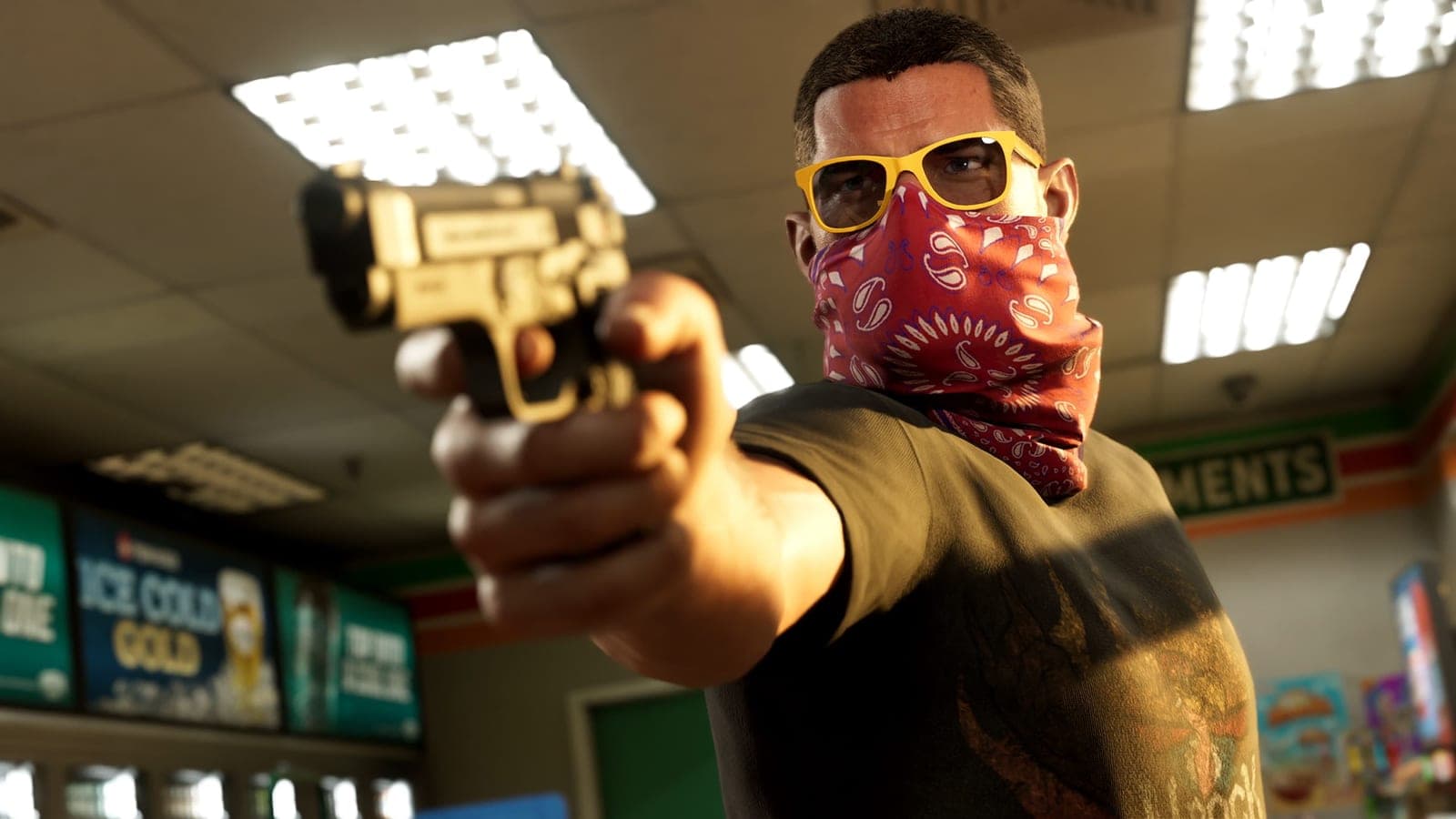
Combat is the system Rockstar has said the most about and shown the least of in isolation. The Extended Look put Jason and Lucia in four or five firefights, and Rob Nelson's interviews around it described the thinking underneath them. What nobody has produced is a demonstration of the shooting on its own terms — no combat-focused deep dive, no hands-on write-up of a player fighting badly and losing.
That distinction matters more here than for most systems. A scripted mission sequence is designed to look good. This piece sets out what is established, what is observed, and what is neither.
Cover looks like a system, not a hedge
The clearest sequence is the night shootout in an office building. Jason takes cover against walls, holds position, and leans out to fire before returning behind the surface. In the apartment block raid, the pair use the corners of a hallway to lay down fire while police push in.
The reason this reads as a genuine cover system rather than GTA V's contextual sticking is the deliberateness: the character stops behind a surface, stays there, and the camera settles rather than the player scraping along a wall until the animation catches. Anyone who played GTA V knows the difference between cover you take and cover you fall into.
That is an observation about footage, though, not a specification. Rockstar has not published a description of the cover mechanics — no statement about how you enter cover, whether it is a hold or a toggle, whether you can move between cover points, or whether blind fire is a separate action from leaning out. The showcase is the only evidence, and a showcase is played by someone who knows exactly where the walls are.
Focus aim, and the colour-coded body
The most concrete new mechanic in the footage is a slow-motion aiming state. Jason enters it during the office fight, time stretches, and points on the enemy's body are picked out in red and yellow overlays.
The colours are the interesting part. Red marks a lethal shot, yellow an incapacitating one, and the reticle then flashes back in the matching colour to confirm which you landed. That is a targeting interface built specifically to let you choose not to kill someone — Jason is shown taking enemies down by the legs rather than the chest.
Two things follow. The series has had slow-motion aim before, in Max Payne 3, Red Dead Redemption and GTA V's Michael, so the mechanic itself is not new to Rockstar. What is new is attaching it to a lethal/non-lethal choice rather than to raw efficiency. And the ordinary aiming reticle has changed too: VI uses a proper reticle rather than GTA V's dot, and it stays on screen while a weapon is drawn.
Not killing people is now a supported way to play
Rockstar has been unusually direct about this. Suppressive fire is in the game, and it is a first for the series. Nelson described it to Famitsu as an option for getting through tight situations — a store robbery, a standoff — without killing the people in the room.
His framing of the broader point is worth quoting exactly, because paraphrases of it have drifted:
There are quite a few moments where you can make progress without killing anyone.
The example the developers pointed to is in the showcase itself. During a police pursuit, Jason shoots out the tyres of a police truck and rolls it. Nelson's note on the scene is that none of the police involved in that chase died.
This is not a pacifist mode and Rockstar has not called it one. It is the difference between a game where non-lethal play is something you impose on yourself with a self-denying ordinance, and one where the mechanics — suppressive fire, limb targeting, the yellow overlay — are built to support it. Whether any mission can actually be completed without a kill is a separate question, and nobody has answered it.
Why the game cares how violent you are
The reason for all of this is the criminal profile: a system tracking how far past necessary your violence goes, explicitly compared by Rockstar to Red Dead Redemption 2's honour system and described as cutting deeper than it. Escalate consistently and the world pushes back on you differently.
Combat is where that system gets its input. It also changes what happens before a fight starts — walking down a street with a rifle out draws attention, and an NPC who sees you enter a shop armed may call the police before you have done anything. Open carry is a decision in VI in a way it never was in GTA V, where you could stand next to a pedestrian holding a rocket launcher and be ignored.
The full consequences picture is a bigger topic than combat, and we cover it in what Rockstar has actually shown of the criminal profile. The combat-relevant half is simply this: how you win a fight is now recorded.
The other side of the gun
Nelson's clearest statement about the design goal is about the player's power relative to everyone else's:
You are still powerful and capable, but you are not the only one capable of violence or the only one with weapons or the only crazy person out there.
His stated aim is a world that is less predictable because the player is no longer the only armed party with intentions. In GTA V you were functionally overpowered against everything except the police, and combat difficulty came from wanted stars rather than from opposition.
Treat this as a design goal rather than a demonstrated outcome. It is a statement about how the game is meant to feel, made by the person responsible for making it feel that way, eleven weeks before anyone outside Rockstar can check.
Weapons in the middle of a fight
Several smaller details from the showcase point the same direction — that a firefight is meant to be something you improvise through rather than arrive at fully equipped.
Weapons are picked up and dropped freely. Jason grabs a shotgun off the floor mid-fight, and Lucia takes a gun off an attacker in a stairwell after fighting him. Guns carry brand names and model numbers, and are visibly slung across the back when not in hand rather than vanishing.
Melee is in the mix rather than being a separate mode. In the party sequence, Jason shoots armed attackers upstairs while Lucia fights with her fists downstairs, with the player switching between them as the situation demands. Drive-by shooting appears throughout, most prominently in the Raul Bautista getaway where Jason fires on police cars and a helicopter from the window while Lucia drives.
What comes from the leaks, not from Rockstar
A large amount of the combat detail circulating since August originates in leaked footage rather than in anything Rockstar published or showed. We do not treat that material as confirmed, and it is worth naming the specific claims so you can recognise them elsewhere:
- A smaller, Red Dead Redemption 2-style weapon wheel, implying a limit on how many guns you carry
- A separate item wheel alongside the weapon wheel
- Healing items usable mid-fight
- Melee animations resembling RDR2's
Some of these look plausible and one — the reticle colour flash — was subsequently visible in the official showcase. That does not retroactively validate the rest. Rockstar has not commented on the authenticity of the individual claims, and its only public statement on the leaks was that they were heartbreaking for the team.
Anything you read specifying which buttons do what in combat is in the same category or worse. No control scheme has been published.
Confirmed, or not
| Claim | Status |
|---|---|
| Suppressive fire, new to the series | Confirmed by Rob Nelson |
| Progress is possible in places without killing anyone | Confirmed by Rob Nelson |
| Criminal profile tracks how violent you are | Confirmed by Rockstar |
| NPCs react to visible weapons and may call police | Confirmed by Rockstar |
| The player is deliberately less overpowered than in GTA V | Stated design goal, Rob Nelson |
| Slow-motion focus aim with red/yellow body targeting | Shown in the Extended Look |
| Reticle flashes red for a kill, yellow for an incapacitation | Shown in the Extended Look |
| Cover used deliberately, with leaning out to fire | Shown in the Extended Look |
| Weapons picked up from the ground and off enemies | Shown in the Extended Look |
| Named weapon brands and models; guns slung on the back | Shown in the Extended Look |
| Partner gives covering fire regardless of who you control | Preview reporting, not a Rockstar statement |
| How cover is entered, held or moved between | Not described by anyone |
| Weapon carry limits and the weapon wheel layout | Leak material only — unconfirmed |
| Any control scheme or button mapping | Not published |
What is still not confirmed
How the cover system works. The single most-discussed combat feature in VI has never been described by Rockstar. Everything written about it, this article included, is inference from watching someone else play.
Whether focus aim is universal. It has only been shown with Jason. Whether Lucia has it, whether it is a resource that depletes like Dead Eye, whether it recharges, and whether it can be turned off are all unstated. Claims that it is a character-specific ability along GTA V's lines are guesses — Rockstar has announced no special abilities for either protagonist.
Whether any mission can be completed non-lethally. Nelson said there are moments where you can progress without killing. That is not the same as a full non-lethal run, and he did not claim it was.
How much the criminal profile actually changes. "The world treats you differently" covers everything from a few altered lines of dialogue to genuinely different mission availability. Nobody outside Rockstar has seen the range.
Difficulty, health and damage. No health system, regeneration behaviour, armour, or difficulty options have been described. Whether the "not overpowered" goal means enemies do more damage, take more punishment, or simply behave more intelligently is unknown.
Aim assist and lock-on. GTA V's lock-on aiming was a defining and divisive part of how it played. Rockstar has said nothing about what VI does, and this is a bigger open question than the cover system for anyone who cares how the game feels in the hand.
How any of it holds up over forty hours. One showcase and a set of interviews are not a review. Combat is the system most likely to look excellent in a curated 26 minutes and reveal its limits at hour thirty, and no one will know which until launch on 19 November 2026.
We will update this page as Rockstar confirms things, and again after launch. In the meantime, see the Extended Look breakdown, how character switching works, who is Lucia Caminos, or the weapon database as it fills in.
Read next
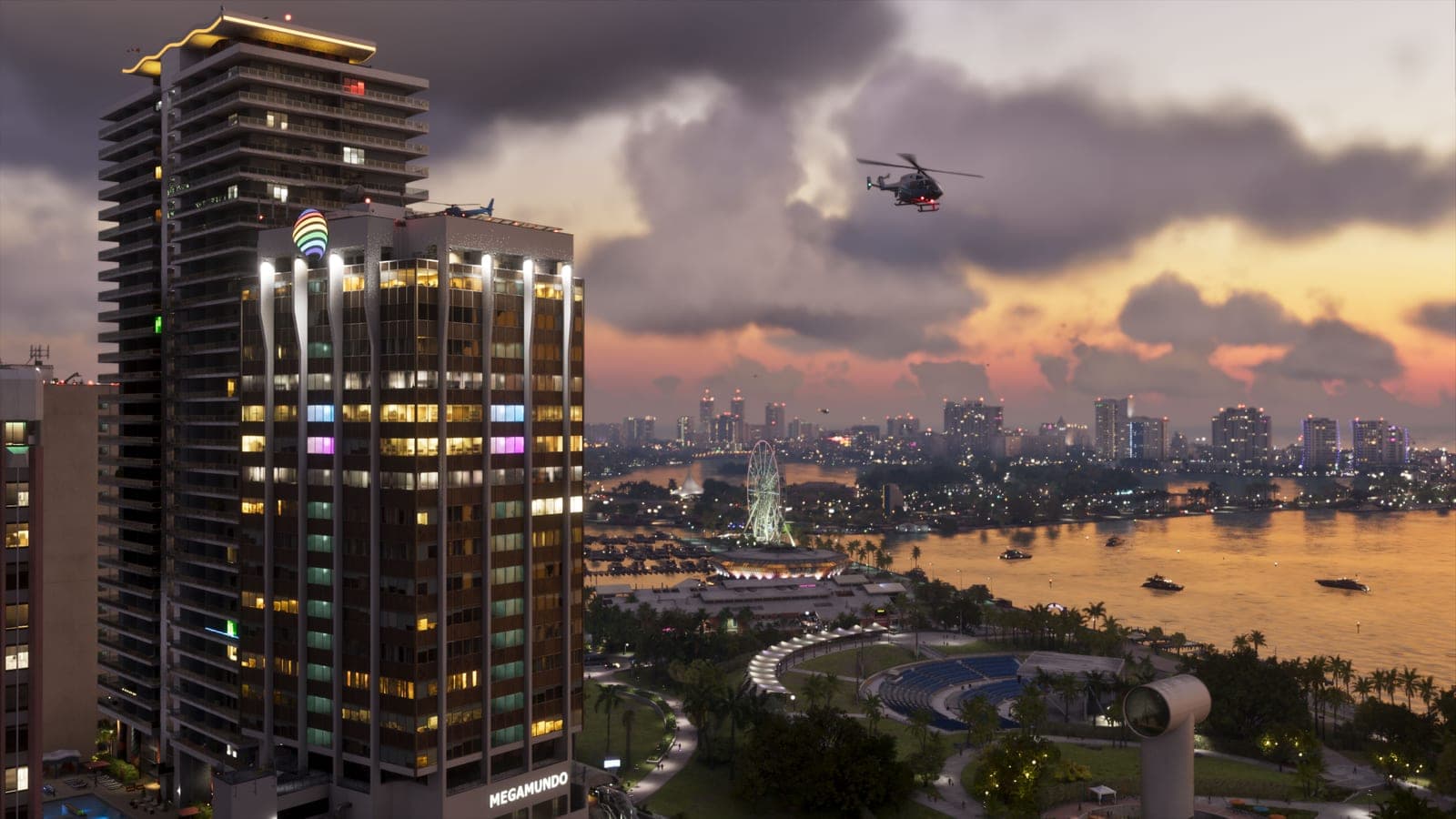
The Rockstar tribunal: what a Glasgow courtroom has revealed about GTA 6
Rockstar dismissed 34 staff across its UK and Canadian studios on 30 October 2025. Thirty-one of them are now in front of an employment tribunal in Glasgow that runs until mid-October, and Rockstar's own filings have become the first place the studio has ever referred to a GTA VI online format.
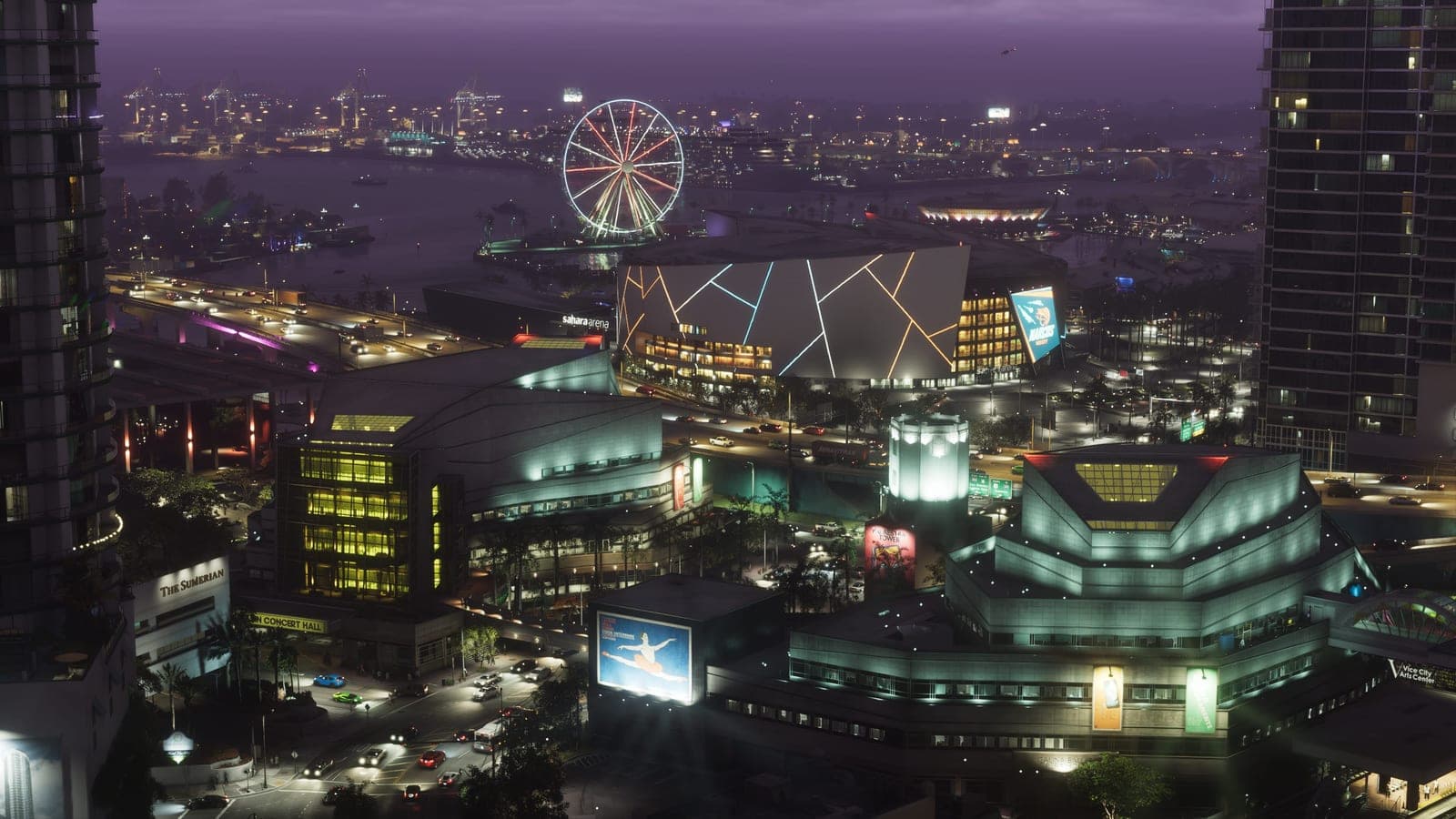
Miami is being turned into Vice City: the rooftop sign, the beach deal, and who signed them
A helicopter lifted WELCOME TO VICE CITY onto the roof of the Miami Heat's arena on 22 September. Miami-Dade County is collecting $975,000 for it, Miami Beach has voted 4-3 to take at least $3 million more, and Rockstar has said nothing publicly about either. Here is what the public records actually show.
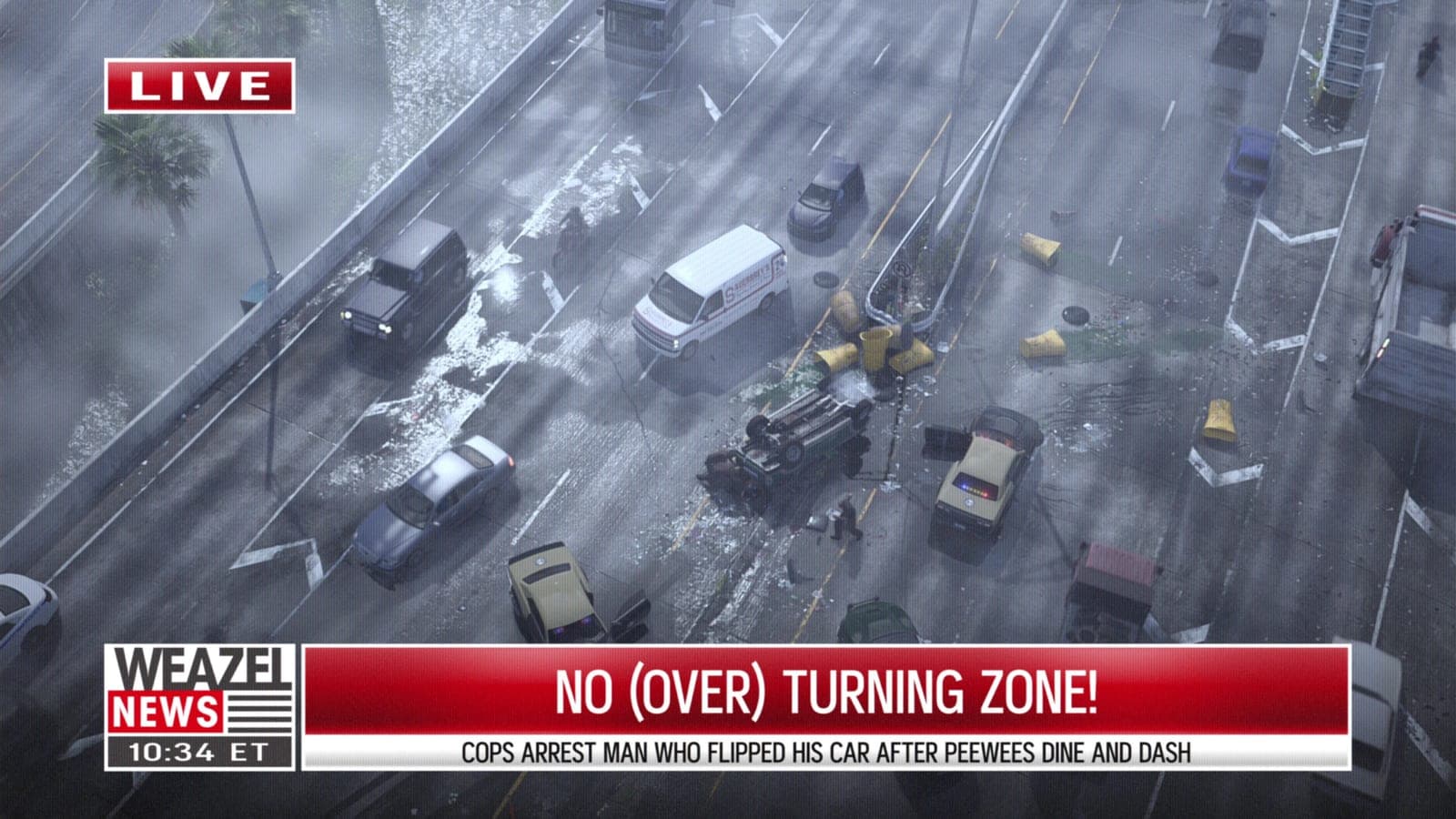
GTA 6 police and wanted levels: six stars, heat icons, and what the cops know about you
Six wanted stars are back, and underneath them sits a row of icons showing exactly what the police have on you — your face, your clothes, your car, your partner, the CCTV. Here is how the heat system works in Grand Theft Auto VI, and what Rockstar still has not said.