The GTA 6 system that almost never got pitched: how a 2014 prototype shaped Vice City's crowds
Rockstar's NPC interaction system — the thing that decides what a stranger does when you walk up to them — was built as a side prototype in 2014, and the lead who saw it first did not want to show it upstairs. Here is the twelve-year history Jason Schreier's follow-up video put on the record, and what it still does not tell you about Grand Theft Auto VI.
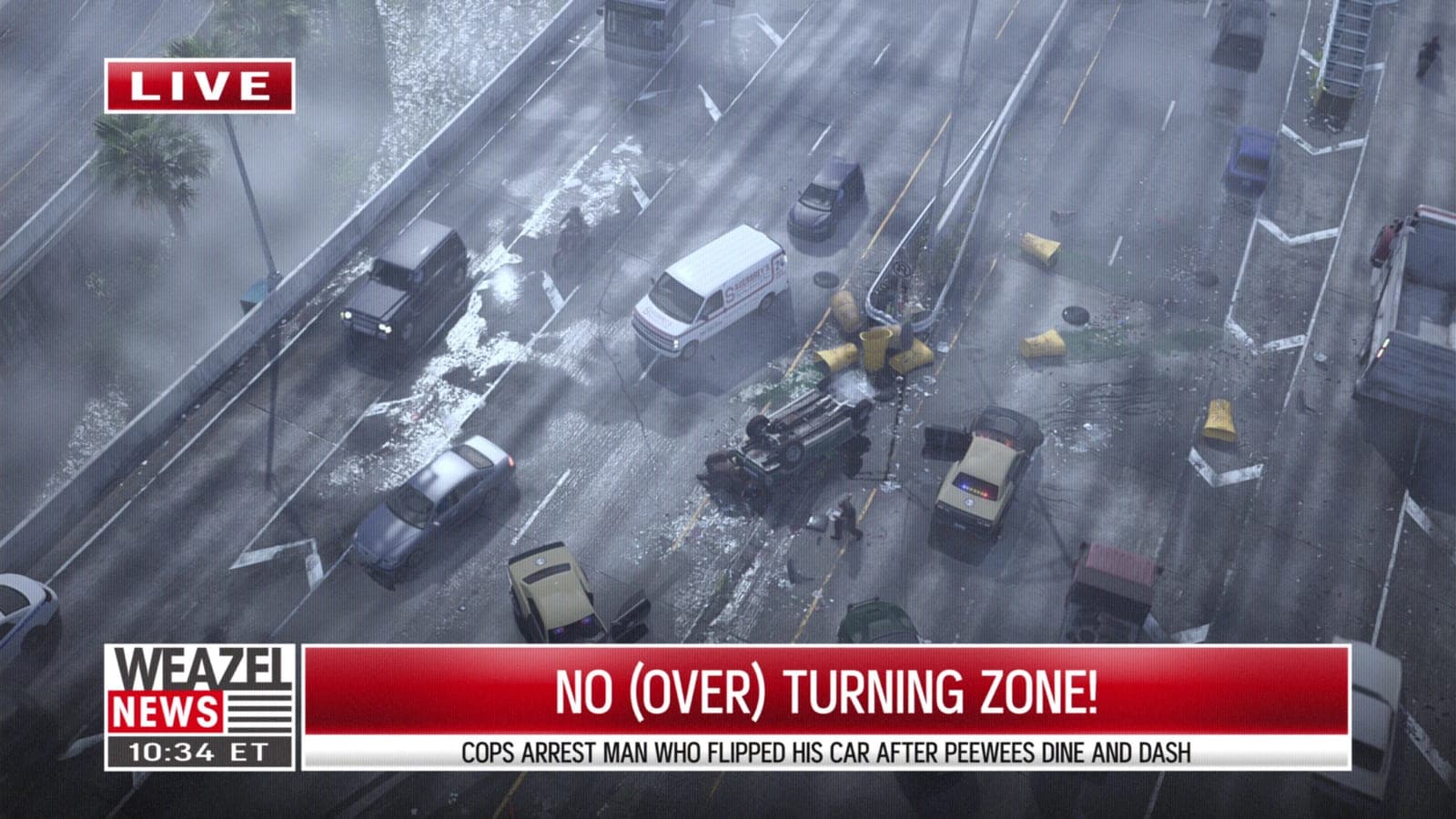
The single most-cited feature of Grand Theft Auto VI's world is the one Rockstar has described the least: the system that decides what a stranger does when you walk up to them. Rob Nelson has called it "returning and evolved" from Red Dead Redemption 2 and said VI takes it "much further", and that has been the whole of the public record for months.
On 19 October Jason Schreier published a follow-up video to his Bloomberg feature — the offcuts from the same visit to Rockstar North — and it finally gives that system a history. It was prototyped in 2014, by one person, outside any plan. It nearly was not shown to the person who could approve it. And the reason it nearly was not shown is the most revealing detail in the whole account.
None of this is an announcement, and none of it describes a mechanic you will use. It is provenance. But for a system Rockstar has spent two years referring to and never specifying, provenance is most of what there is.
Who is in this story
| Who | Role, as reported | What they are the source of |
|---|---|---|
| Mark Tennant | Vice president of animation, Rockstar | Built the original prototype |
| Phil Hooker | Development lead, Rockstar North | Saw it first; did not want it passed upwards |
| Rob Nelson | Co-studio head, Rockstar North | Saw it anyway; the reaction quote |
Hooker and Nelson are both named in Bloomberg's 14 October development history, which is where most readers first met them. Tennant is new to this story. Recent coverage calls him vice president of animation; older reference material calls him animation director, and nothing published this week settles which is current.
What the prototype actually did
Before it, a Rockstar player's only real means of addressing a passer-by was to point a gun at them. The prototype replaced that with a choice on the same button: greet the person, or antagonise them. That is the mechanic that shipped in Red Dead Redemption 2 four years later, and it is the one Nelson now says VI inherits.
Put plainly, it is a single input with two intents attached. The significance is not the input. It is that every ambient character in the world then needs something to say and somewhere to go in both cases — which is precisely the workload Hooker is reported to have been worried about.
The part worth reading twice
The reported sequence is that Tennant showed the prototype to Hooker, and Hooker did not want it shown to Nelson — because Nelson, in the account relayed from the video, is the one who "wants to do the world" regardless of how much work that makes for everyone else.
Nelson was shown it. His reaction, as carried by several write-ups of the video:
This is incredible; this will revolutionize the way our games and our worlds work.
He was right, and so was Hooker. The system did become foundational, and it did cost an enormous amount of work — an office in Los Angeles staffed to do almost nothing but pedestrians, and a studio that has grown 93 per cent since Red Dead Redemption 2. We set both figures out in the world density breakdown.
Treat the anecdote as an anecdote. It is a second-hand account, from one reporter's video, of a conversation held over a decade ago between people who now have a game to sell. It is plausible, it is consistent with everything else known about how Rockstar works, and it is not a document.
Twelve years in one column
| Game | What you could do to a stranger |
|---|---|
| Red Dead Redemption (2010) | Basic interaction, in Nelson's own description "very simple" |
| GTA V (2013) | Greet or insult, fixed to the character you were playing |
| Red Dead Redemption 2 (2018) | Greet or antagonise, with the prototype's logic behind it |
| GTA VI (2026) | "Returning and evolved", taken "much further" — unspecified |
The last row is the problem. Three of those four cells describe a game anyone can go and check. The fourth is a pair of quoted phrases.
What "evolved" has been allowed to mean
Nothing Rockstar has published says what the evolved version does. What has been said, across Nelson's interviews, is that characters notice if you stand too close and listen in, and that passers-by react to being followed. Both are reactions to proximity and attention rather than descriptions of the interaction system itself.
Everything else circulating is inference, and some of it has hardened into assertion. The claim that NPCs remember you between encounters does not come from Rockstar — we traced it in the world density piece to posts attributed to a former employee, rounded up to "confirmed" by repetition. A longer history for the system makes that claim more plausible. It does not make it sourced.
It is also worth keeping the two populations apart. This system governs the crowd — the unnamed thousands. The people with names, histories and roles in the story are a separate problem with separate answers, and they are in our character database.
The two hours that never reached the mission
The best illustration of what the system costs a player is in the original 14 October feature rather than the new video, and we did not carry it at the time.
Hooker sat down with a late build to test a story mission. He collided with another driver on the way; the driver came back at him; the two of them pulled over to settle it. He went into a shop for health items, was insulted by someone inside, and the argument turned into a fight. The till was unattended, so he robbed it. The police chased him. He lost them, dumped the car, found another, followed a car playing loud music to a compound, stole from it, sold the goods to a fence, and picked up a tip about something else. Two hours in, he had not started the mission.
That chain begins with an NPC reacting to a collision and turns on an NPC picking a fight in a shop. Nothing in it is new mechanically — it is the wanted system, the shop robberies covered in what the demo actually showed, and the interaction system doing what it does. What it demonstrates is the chaining, and chaining is the thing no feature list can show you.
One caution. The accounts differ on the trigger — Bloomberg's own framing leads with the road-rage collision, while some write-ups lead with the insult in the shop. The sequence above follows the version that most outlets carry, and the disagreement is printed rather than resolved.
Six people, then sixty-five
The other genuinely new figure in the video is about production rather than design. Rockstar's art production team is reported to have gone from about five or six people on GTA V to 65 on VI, and some artists are said to have been working on this game for more than eleven years, beginning with the map in 2015.
That 2015 date is not a new fact so much as a new angle on an old one: Nelson told Bloomberg the first Miami research trips happened that year, which is the clock the eleven-year framing runs on. What the video adds is that map work started then too, rather than after the research.
| Figure | Status |
|---|---|
| Art production team of 65 on VI, five or six on GTA V | Reported from the video, no Rockstar release |
| Some artists on the project for 11+ years | Reported from the video |
| Map work beginning in 2015 | Reported; consistent with the 2015 research trips |
| Headcount 2,441 in 2018, 4,711 now | Confirmed by Rockstar to Bloomberg |
A tenfold art team is a real number and a weak predictor. It tells you how much was made. It does not tell you how much of it you will notice, and the gap between those two is the whole argument about how big Leonida actually is.
Confirmed, or not
| Claim | Status |
|---|---|
| The NPC interaction system is returning and evolved from RDR2 | Confirmed by Rob Nelson |
| It was prototyped in 2014 by Mark Tennant | Reported from Schreier's video; sources say 2014 or 2015 |
| Hooker was reluctant to show it to Nelson | Reported from the video, second-hand |
| Nelson's "revolutionize" quote | Carried concordantly by several write-ups |
| What the evolved version does differently | Never stated |
| NPCs remembering you between encounters | Not from Rockstar — unverified |
| Art team of 65, up from five or six | Reported from the video |
| Any of this applying to an online mode | Nothing announced |
What is still not confirmed
What the system does in VI. Two years of quotes have established that it exists, descends from Red Dead Redemption 2 and goes further. No input, no outcome, no range of responses and no limit on any of it has been described.
Whether it varies by place or person. Rockstar has said populations differ across Leonida. It has not said whether the interaction does — whether a stranger in Vice City responds differently from one in a small Gulf town, or whether the difference is only in who is standing there.
Whether anything persists. A reaction and a memory are different systems, and only the first has been described.
Tennant's title, and the prototype's year. Reported as 2014 by most outlets, 2014 or 2015 by others, and his role is given two ways.
Whether the chaining survives contact with players. Hooker's two hours are a developer's session in a studio, recounted by a journalist. It is an attractive story and it is not a measurement.
A correction to one of our pages
Our piece on what the demo actually showed dated Schreier's follow-up video to 17 October. It was published on 19 October 2026, and both language versions have been corrected in the same commit as this article. Nothing else on that page changes.
For the rest of what is settled before 19 November, the development history is in why the game took eleven years, and everything Rockstar has said about crowds is in NPCs and world density.
A note on sourcing. bloomberg.com, youtube.com, gamesradar.com, pcgamer.com, kotaku.com, gamespot.com and rockstargames.com are all unreachable from this writer's network, so neither the video nor the feature could be watched or read first-hand. Everything above is taken from the reporting of outlets that did, and quotations are given only where several independent write-ups carry the same wording. Where accounts conflict — Tennant's title, the prototype's year, the trigger for Hooker's session — the conflict is printed rather than resolved. No leaked material was used, and none is described.
Read next
GTA 5 leaves PS Plus on 17 November, two days before GTA 6 arrives
Sony's November removals take Grand Theft Auto V and Red Dead Redemption 2 out of the PlayStation Plus Game Catalog on 17 November 2026, 48 hours before GTA 6 launches. Here is what the removal takes away, what it leaves alone, and why the obvious reading of the timing is weaker than it looks.
GTA 6 interiors: Rockstar says there are hundreds, and showed one being robbed
Bloomberg's visit to Rockstar North produced more than a history of the delays. Rockstar has now put a word on how much of Leonida you can walk into — hundreds of small interiors — and the demo it ran emptied the back office of a petrol station without anyone noticing. Here is what the second half of that reporting establishes, and what it does not.
Miami-Dade votes on 20 October: the airport, the Metromover, and what the county cannot take back
Commissioners vote on Tuesday on whether the mayor's office may keep negotiating with Rockstar. The pitch covered Miami International, wrapped Metromover cars and a PortMiami mural. The rooftop sign, the Miami Beach deal and everything on a public road are outside what the vote reaches.