Why GTA 6 took 11 years: Rockstar finally explains the delays, on the record
Bloomberg's 14 October feature has Rockstar's own leads describing Project Americas, the two continents cut from the map, the NPC projections that were 'horrifying', and the phone call where Take-Two's CEO asked them to tell him they were kidding. Here is what is now on the record, and what still is not.
For three years the only reason Rockstar has given for delaying Grand Theft Auto VI was "polish". On 14 October that changed: a Bloomberg feature by Jason Schreier has Rockstar's own development and publishing leads describing, on the record, what the game was originally meant to be, which part of it defeated them, and what each of the two delays actually bought.
This is the first time anyone inside the studio has named a cause. Until today, every account of why this game slipped — including the one on this site — had to be labelled as reconstruction. Several of them can now be retired.
It is worth being exact about what the feature is. It is not an announcement, it changes nothing about 19 November, and it contains no new information about the game you will be playing in 36 days. It is a development history, built from interviews with named Rockstar staff, published five weeks before launch because that is when a studio agrees to this kind of access.
Who spoke, and what each of them said
| Who | Role | What they are the source for |
|---|---|---|
| Rob Nelson | Head of development, Rockstar North | Project Americas, the 2015 research trip, the Red Dead collision, the NPC projections |
| Jennifer Kolbe | Head of publishing, Rockstar | The two phone calls to Strauss Zelnick; the studio's account of crunch |
| Phil Hooker | Development lead | What the second delay bought; what the next game inherits |
| Aaron Garbut | Co-studio head, Rockstar North | The engine and tooling built for this project |
| Strauss Zelnick | CEO, Take-Two | Why he signed off on both delays |
Nelson has been the public face of this game since August and has given a long interview to IGN already. Kolbe and Hooker have not spoken at this length before, and Kolbe's account is the one that produced the headlines.
It was going to be two continents
Nelson dates the start of the project to 2015, when Rockstar staff made their first research trip to Miami. The internal codename was Project Americas, and the plan was a map covering parts of both North and South America.
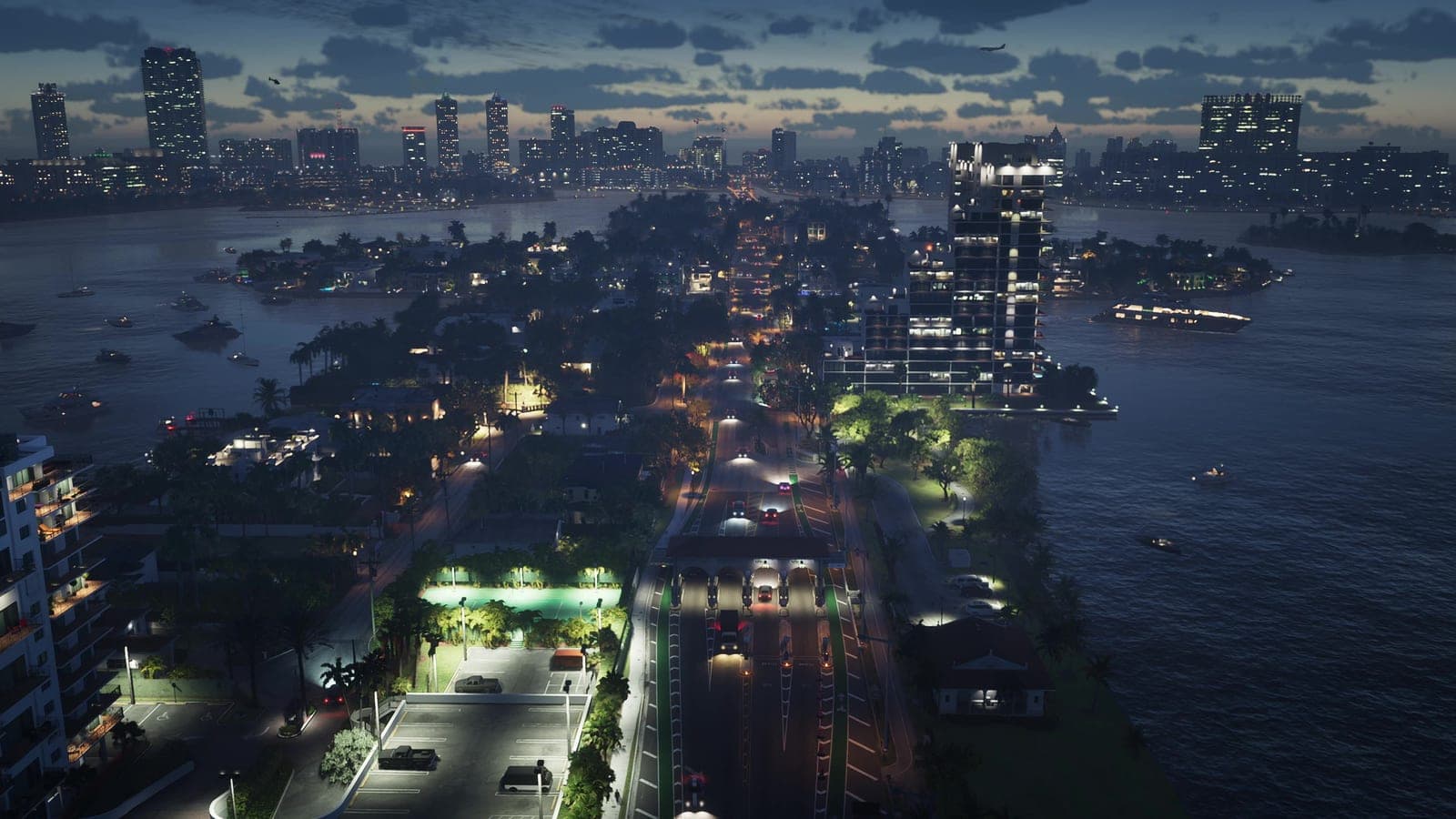
That plan no longer exists. Rockstar reeled the scope in to a fictional Miami and the state around it — the Leonida you have seen. What was cut has never been shown, described or dated, and nothing in the feature suggests it exists in any playable form.
The 2015 date is also worth holding against the number in the headlines. Counting from GTA V's release on 17 September 2013, the wait is thirteen years and two months. Counting from the first research trip, the game took eleven years. Counting from full production, it is less than that again — an ex-Rockstar developer has put the real start at 2018, and the feature does not settle which clock is the right one.
Red Dead Redemption 2 is what delayed it first
The original plan was for Rockstar North to build GTA VI at the same time as Rockstar San Diego built Red Dead Redemption 2. That is how the company used to work: several games at once, spread across offices.
It did not survive Red Dead. As that game's scope grew, Nelson says he realised it needed the whole company rather than one studio, and staff from across Rockstar's offices were pulled onto it to get it out in 2018. GTA VI was pushed back by several years as a direct consequence, and the working model changed permanently. Nelson says the bulk of Rockstar's staff now work on one project at a time before moving to the next.
So the first thing that delayed GTA VI was not GTA VI. It was the previous game, and the decision that cost it those years was taken years before the first trailer existed to be delayed.
The thing that broke the schedule was pedestrians
The specific cause Nelson gives for the first delay — 2025 to 26 May 2026 — is the one detail in the feature that reads as a confession rather than a retrospective. The team could not hit its own targets for the number of non-player characters that had to be written and animated.
The projections they were giving us were horrifying.
Rockstar's answer was structural: it stood up an office in Los Angeles staffed with writers, producers and directors working on nothing but NPCs. That office is not news to anyone who has followed this game closely — Garbut described it to the New York Times last year, and it is covered in our world density piece. What is new is the reason it exists. It was not an ambition. It was a rescue.
This is the single most useful thing in the feature, because it inverts the usual reading. The density everyone has been admiring in the trailers is not what Rockstar built with the extra year. It is what cost them the year.
The second delay, and the phone call
The move from 26 May to 19 November 2026 has a different explanation, and it comes from Hooker: the team could have met the earlier date, but doing so would have meant compromising on the game it wanted to make. That is closer to the official "polish" line than Nelson's account of the first delay, and it is the studio's own framing of a decision it took voluntarily.
Kolbe's contribution is the human cost of making that call twice. She phoned Zelnick for the first delay. Months later she had to phone him again.
I think he said, "You're kidding. Please tell me you're kidding."
She says he came round once he heard the reasoning — "but once we talked through why, he got it" — and credits his temperament, saying she felt fortunate that he is as reasonable as he is, where another executive might not have moved. Zelnick's own position in the feature is that delaying a game is usually a wise investment of time and money if it gets the game to the level of perfection it is capable of reaching.
Note what that does and does not establish. It confirms the delays were Rockstar's decision and Take-Two's concession, which is what both companies have said publicly all along. It does not mean the second delay was painless: Take-Two's shares fell 7 to 10 per cent after hours on the day it was announced.
The scale, with real numbers at last
The feature replaces the rounded figures everyone has been using with exact ones.
| Around RDR2's release (2018) | Now | |
|---|---|---|
| Employees | 2,441 | 4,711 |
| Offices | — | 12 (one outlet's coverage says 11 studios) |
That is a 93 per cent increase. It is not a doubling, which matters only because "Rockstar more than doubled in size" has been repeated everywhere for a year — including on this site until today, which we have now corrected. The real number is large enough without the rounding, and the rounding traces to a secondary report rather than to Rockstar.
What the next game inherits
Hooker's forward-looking claim is that the engine, the tools and the team assembled for this project will let Rockstar work faster in future, and that he expects the company to go "more sideways than upwards" — building on what exists rather than starting over. Garbut's version is that the team changed a great deal on this project and has no intention of pulling that work apart now it is done.
The precedent cited is Vice City, which followed GTA III in under a year on shared technology.
Treat this as an aspiration from the people who would have to deliver it, and read the limits carefully. It is not a commitment, not a date, and not a statement that the next Rockstar game is GTA VII. Nothing in it bears on the PC version or on the online mode, neither of which Rockstar has announced.
The money, still
A person involved with the game told Bloomberg the widely circulated $1.5 billion development cost is wrong. Rockstar still will not say what the right figure is.
That rumour began as an analyst's estimate and hardened into a fact through repetition, which is the usual route. Rejecting it does not produce a replacement: the published estimates run from the high hundreds of millions to north of $2 billion, and all of them are estimates. The development cost of this game remains unknown.
The crunch claim, and why it is contested
Kolbe's account of how the game was made is that Red Dead Redemption 2's crunch led Rockstar's leadership to decide not to repeat it, that staff were given paid time off in exchange for extra hours, and that the result was imperfect but far better than before.
I think we did things differently, and I'm proud of that.
She concedes it has "not been perfect" while calling it "certainly better than Red Dead 2 was", and Schreier's own reporting has previously said much the same — that overtime was not eliminated, but that staff describe conditions as night and day against earlier projects.
This is the employer's account of its own labour practices, offered five weeks before launch, and it is contested. Rockstar dismissed more than 30 staff across its UK and Canadian studios on 30 and 31 October 2025; the IWGB calls it union busting, Rockstar says it acted over the distribution of confidential information, and an employment tribunal is hearing the case in Glasgow now — including evidence this month about an alleged informant in the union's Discord. Rockstar employees separately told reporters in July that crunch was built into their contracts.
Both things can be true: conditions may genuinely have improved against a notoriously bad baseline, and the company may still be facing serious allegations about how it treated the people raising concerns. The feature carries the first and does not address the second.
What is not confirmed
- The development cost. Rockstar has rejected $1.5 billion and supplied nothing in its place.
- What was in Project Americas. No region, city, character or mechanic from the two-continent plan has been described, and nothing suggests the cut material survives.
- Whether 19 November holds. The feature announces no third delay, and Rockstar has not ruled one out. The record is in the delay history.
- Phil Hooker's exact title. Coverage of the feature calls him both technical director and head of development.
- What Rockstar makes next, or when. "More sideways than upwards" is a hope about tooling, not a plan anyone has announced.
- Anything about the game itself. No new mission, map, character or system is revealed here. The map and the regions are unchanged by it.
Why it matters, five weeks out
The honest answer is that it does not change what ships on 19 November. What it changes is the quality of the explanation available for the last three years, and this site's standard is that an explanation from a named person inside the studio outranks a plausible reconstruction from outside it — even when the reconstruction was ours.
Two of our pages have been corrected today as a result: the delay history, which said Rockstar had never named a cause, and the world density piece, which carried the rounded headcount. The rest of what is settled about launch is in the release date explainer, and the scope question the feature reopens is in how big the map actually is.
A note on sourcing. Bloomberg's own page could not be read from this site's environment, and neither could the write-ups at GamesRadar, GameSpot, PC Gamer, VGC or Kotaku — every one of those domains is refused by our network. Every quote and figure above is therefore carried as those outlets reported it, concordantly, rather than verified against the feature itself. Where their accounts differ — the office count, Hooker's title — we have said so rather than picking one.
Read next
GTA 6's launch trailer, measured: the same 1440p, no QSSR, and a judder that has been there since 2008
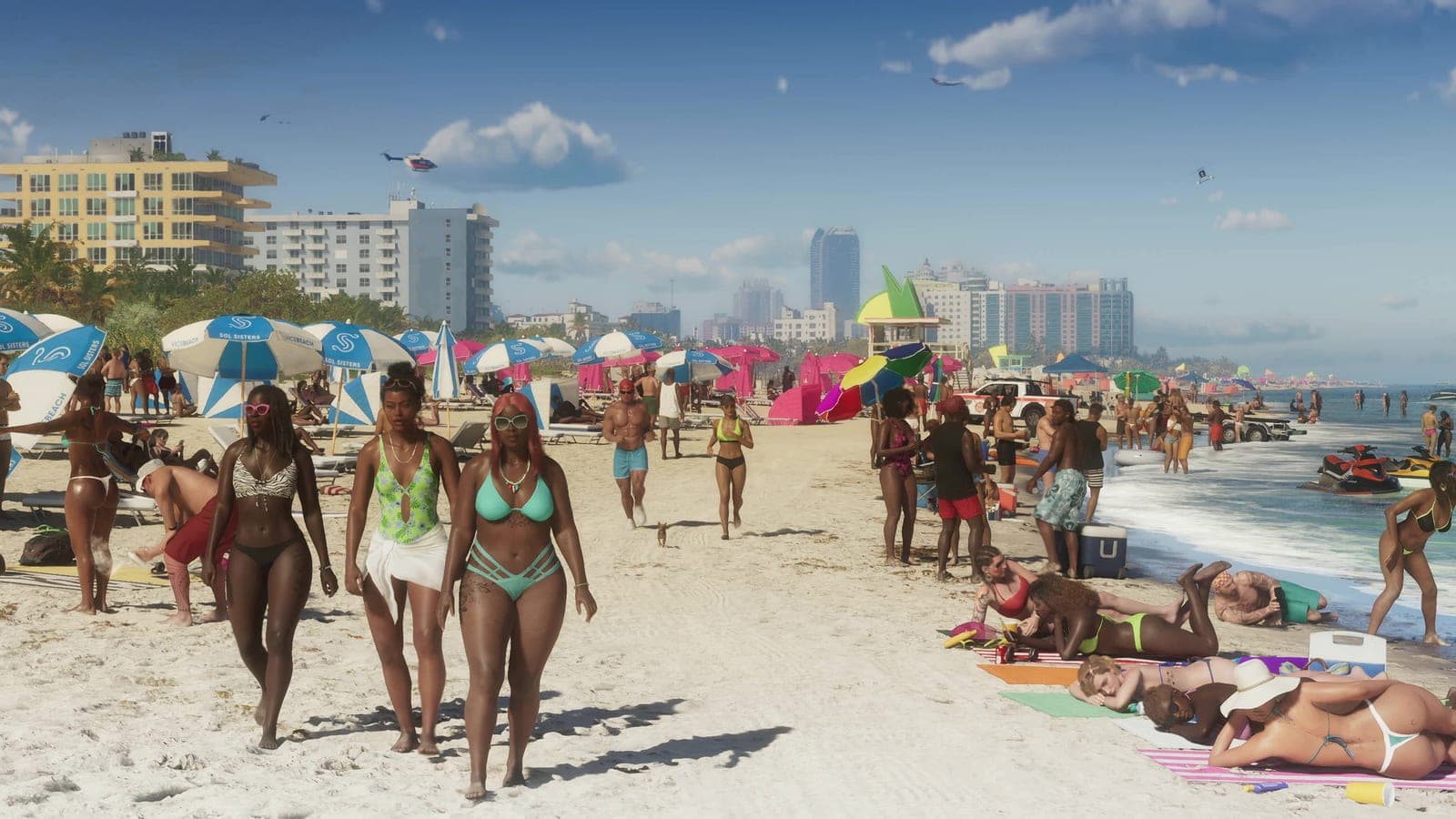
Digital Foundry put the Grand Theft Auto VI launch trailer through a frame-by-frame analysis on 16 October. It found no resolution drop, no sign of the PlayStation 5's new QSSR upscaler, and a RAGE engine animation fault going back to GTA IV that now appears to be gone. Here is what a compressed 90-second video can establish, and what it cannot.

Germany, Japan and Korea have now rated GTA 6 — and the last three labels are the ones with teeth
The USK classified Grand Theft Auto VI on 13 September and nobody noticed for a month. CERO's Z appeared on the Japanese store pages on 17 October, and Korea's new private board cleared it on the 16th. That completes the set — but "adults only everywhere" is not what has happened.

Two guns are missing from GTA 6's banner outside Paris — and the law being cited is about something else
A banner reproducing the Grand Theft Auto VI cover art has gone up on the Mercuriales towers at Porte de Bagnolet with Lucia's pistol and an assault rifle removed. Rockstar has said nothing. France's 1985 firearms advertising law governs adverts for guns, not guns in adverts, and the claim that every GTA 6 poster worldwide has been edited rests on nothing solid.