Miami-Dade votes on 20 October: the airport, the Metromover, and what the county cannot take back
Commissioners vote on Tuesday on whether the mayor's office may keep negotiating with Rockstar. The pitch covered Miami International, wrapped Metromover cars and a PortMiami mural. The rooftop sign, the Miami Beach deal and everything on a public road are outside what the vote reaches.
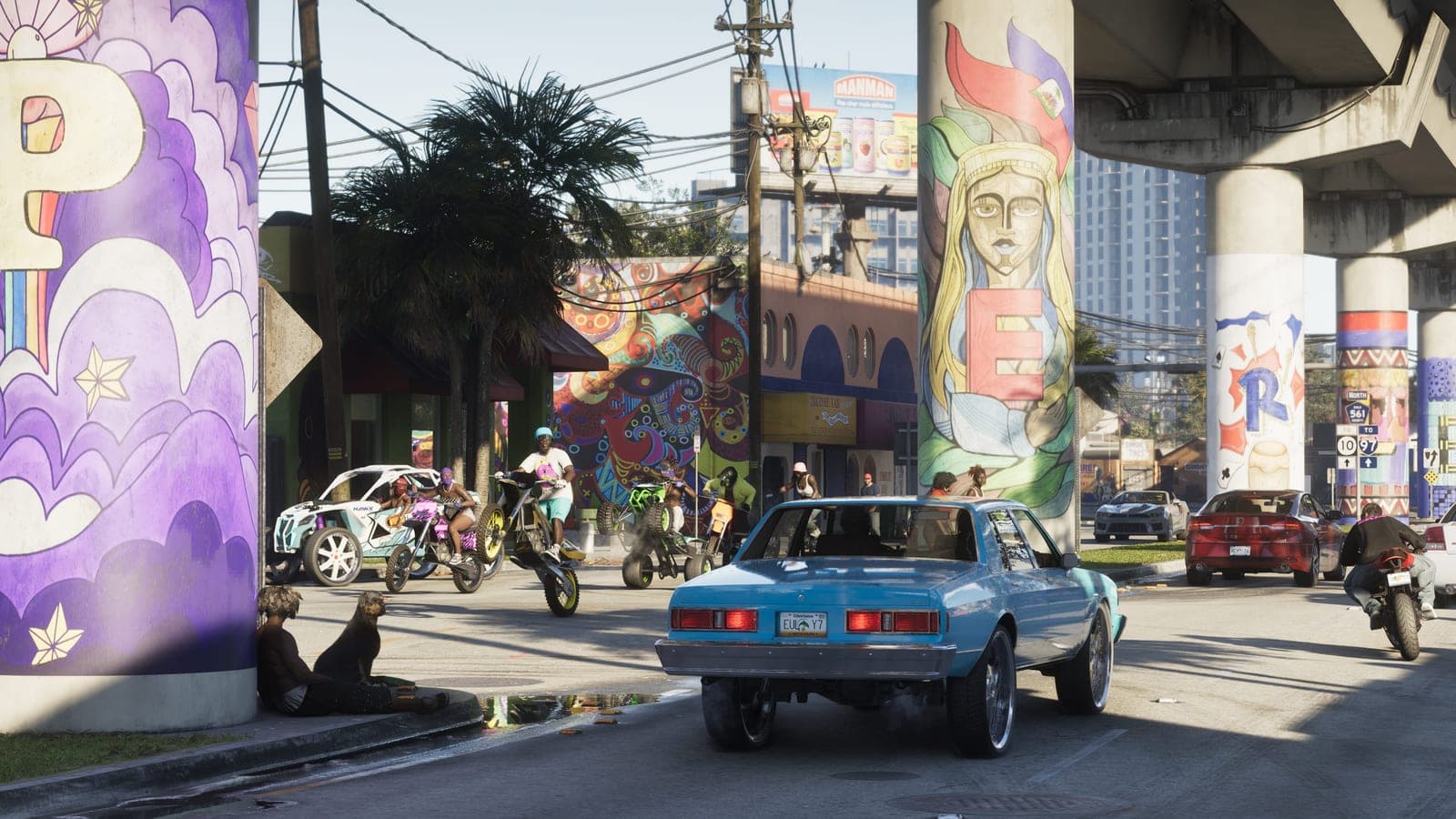
On Tuesday 20 October the Miami-Dade Board of County Commissioners takes up an item it declined to decide a fortnight ago: whether Mayor Daniella Levine Cava's office may negotiate a Grand Theft Auto VI agreement worth more than $1 million. The concepts behind it are not a rooftop sign. They are Miami International Airport, the Metromover and PortMiami.
A good deal of coverage has described the campaign as in jeopardy. It is worth being exact about what tomorrow's vote can actually do, because the answer is narrower than the headlines: it decides whether Miami-Dade County sells more of its own property. Four large pieces of the Vice City campaign sit entirely outside the board's reach, and one of them is already bolted to a roof.
What is on the agenda
The item was sponsored by Commission Chairman Anthony Rodriguez. It would grant the mayor authority to negotiate a marketing agreement with Rockstar Games above the $1 million threshold — the line beneath which a Miami-Dade mayor may sign a contract without the board.
That is the whole of it. It is an authorisation to negotiate, not an approved deal: nothing is signed, no sum is fixed, and any resulting agreement above $1 million would still return to the commission for a vote. Rockstar has published nothing about the proposal, has not confirmed it is negotiating, and has made no statement about any Miami-Dade agreement at any point in this campaign.
What the county pitched
The proposal did not come from Rockstar. A pitch deck prepared by the mayor's office and sent to the studio in June 2026 set out a county-wide "GTA VI × MDC" collaboration. The concepts reported from it:
| Where | The concept |
|---|---|
| Miami International Airport | A Vice City arrival experience — signage, branded luggage carts, themed baggage carousels; one outline adds a wrapped display aircraft |
| Metromover | Cars wrapped in Vice City branding, with Government Center, Brickell and Bayfront Park named among the stations |
| PortMiami | A mural or installation drawing on the game's own Port Gellhorn |
| County streets | Custom manhole covers |
| Tropical Park | A car-culture festival of classic cars and lowriders, pitched as supervised and family-friendly |
Every item on that list was marked subject to feasibility study, permits, property-owner sign-off and formal approval. None of it has been agreed, scheduled or costed in public, and a concept in a pitch deck is the weakest class of claim this site carries. The airport has not been dressed as Vice City; nobody has wrapped a Metromover car.
What happened on 6 October
The item reached the board on Tuesday 6 October and ran into the opposition it had been expected to. Commissioner René Garcia led it, on two grounds at once.
The first was the county's own image:
We're depicting Miami like a murder capital.
The second was price. Rockstar's marketing spend on VI has been reported at at least $150 million; against that, Garcia's argument was that a county selling its airport, its transit system and its port had badly undervalued what it was selling. Commissioner Micky Steinberg put the plainer objection — "philosophically, I feel we should not be moving forward" — and Commissioners Juan Carlos Bermudez, Rob Gonzalez and Vicki Lopez were reported as sharing the reservation.
For the administration, the mayor's chief of staff Christopher Hudtwalcker, who is leading the Rockstar talks, called the campaign a love letter to Miami. Rodriguez's defence was that Grand Theft Auto is a work of fiction.
Then the procedure did the work. With the item apparently short of the votes to pass, Commissioner Oliver Gilbert — a supporter — used a parliamentary motion to close debate before it could be put, carrying it over to the board's next meeting. That is tomorrow.
Separately, commissioners adopted a measure directing that any Rockstar agreement above $1 million come back to the board for approval. Local reporting described this as largely declaratory: county rules already require it. The mayor has said negotiations will continue, and that board approval would be needed for anything above the threshold.
The $1 million line is the whole story
Every procedural turn in this dispute comes off one number.
| Mayor's delegated signing authority | Under $1,000,000 |
| The Kaseya Center rooftop agreement | $975,000 |
| Margin | $25,000 |
The rooftop sign went up without a commission vote because it was priced $25,000 under the line. That is lawful and ordinary, and it is also why commissioners are now arguing about a negotiating authorisation rather than about a contract — the administration has demonstrated it can transact below the threshold without them, and Gilbert's complaint at the September budget meeting was precisely that a series of sub-threshold agreements could add up to one that would have needed a vote.
So a no vote tomorrow does not end the county's involvement. It withholds permission for a large deal. Smaller ones would remain within the mayor's existing authority, unless the board moves the threshold itself — which is not what is on the agenda.
Four things the vote cannot touch
The rooftop sign. WELCOME TO VICE CITY was airlifted onto the Kaseya Center on 22 September under a signed agreement. Tomorrow's item is about future negotiations; it does not reopen a contract already executed.
Miami Beach. The beach-furniture deal — worth at least $3 million, running 15 October to 31 December — belongs to the City of Miami Beach, a separate municipality with its own commission, which approved it 4-3 on 10 September. Miami-Dade County commissioners have no vote on it. Both agreements are set out here with their paperwork.
Everything that needed nobody's permission. A Goodyear airship in Vice City livery over South Florida and a convoy of wrapped road cars on public streets required no municipal approval at all, and neither did the Jason-and-Lucia mural painted on private brick in Brooklyn. The 18 November Miami Heat themed home game is an arrangement between a franchise and a studio.
The game. Grand Theft Auto VI arrives on 19 November whatever Miami-Dade decides. No county board has a position on its content, and no vote here changes a line of it.
Confirmed, or not
| Claim | Status |
|---|---|
| An item authorising negotiations above $1 million is before the board on 20 October | Commission agenda, reported consistently |
| It was sponsored by Chairman Anthony Rodriguez | Reported |
| It was carried over from 6 October by a motion from Commissioner Gilbert | Reported in detailed local accounts |
| Garcia's "murder capital" remark | Quoted by several outlets from the 6 October meeting |
| A separate measure requiring board approval above $1 million was adopted | Reported; described as declaratory |
| The June pitch covered MIA, the Metromover, PortMiami, manhole covers and Tropical Park | Reported from a public records request |
| Any of those concepts being agreed, funded or scheduled | No. Pitched only |
| Sheriff Cordero-Stutz and Commissioner Bermudez opposed the collaboration | Joint statement |
| Any statement from Rockstar on the county proposal | None published |
| The outcome of the 20 October vote | Has not happened |
What is still not confirmed
How the vote goes. Nobody should claim otherwise the day before. The 6 October deferral is evidence that the item lacked a majority then, and a supporter's procedural motion is evidence that its backers thought delay was better than a count. Neither is a prediction.
What the item's text actually says. The authorisation has been described in reporting rather than quoted from the agenda. Its scope — which facilities, what ceiling, how long — is not something this page can set out, and the table above is a list of concepts from a pitch, not of terms in a resolution.
Whether the 6 October item failed or was deferred. Several reprints say the Rodriguez legislation failed and that the board then passed the $1 million directive. The accounts with the most procedural detail say the opposite: Gilbert moved to end debate before the item could be voted down, and it stands carried over. We have followed the detailed accounts, and the distinction matters — a failed item is finished, a deferred one is on tomorrow's agenda.
What Rockstar wants. The studio has not said whether it is still interested in county property, what it offered, or whether a refusal would cost it anything. The campaign it is running without the county's help — airships, wrapped cars, a Brooklyn wall, a basketball night — suggests the answer may be very little.
Whether any of it would have reached players. An airport arrivals hall dressed as Vice City is a thing that happens to travellers landing in Miami. It is place marketing, aimed at a city rather than at a player base, and it tells you nothing whatever about the game: not the map, not the features, not the release plan. The only part of this story that touches Leonida is a fictional port the county wanted to paint on a real one.
Sourcing note: fortune.com, gamespot.com, pcgamer.com, nbcmiami.com, wlrn.org, miamiherald.com and rockstargames.com are all refused by this writer's network, so none of the reporting described here was read first-hand, and no county document was read at all. The 6 October proceedings, the quotations from Commissioners Garcia and Steinberg and from the mayor's chief of staff, the sponsorship of the item, Gilbert's deferral motion and the 20 October date are carried as search results from those outlets described them — Fortune on 19 October, GameSpot on 16 October, PC Gamer on the sheriff's statement, and detailed local political reporting of 14 October — where they agreed. Where they did not agree, the disagreement is printed rather than resolved: see the note above on whether the item failed or was deferred. The contents of the June pitch deck come from reporting of a public records request and are described as concepts, not commitments. The $150 million marketing figure is a reported estimate of Rockstar's spend, not a published one. Nothing in this article comes from Rockstar Games, which has published nothing on the subject.
Read next
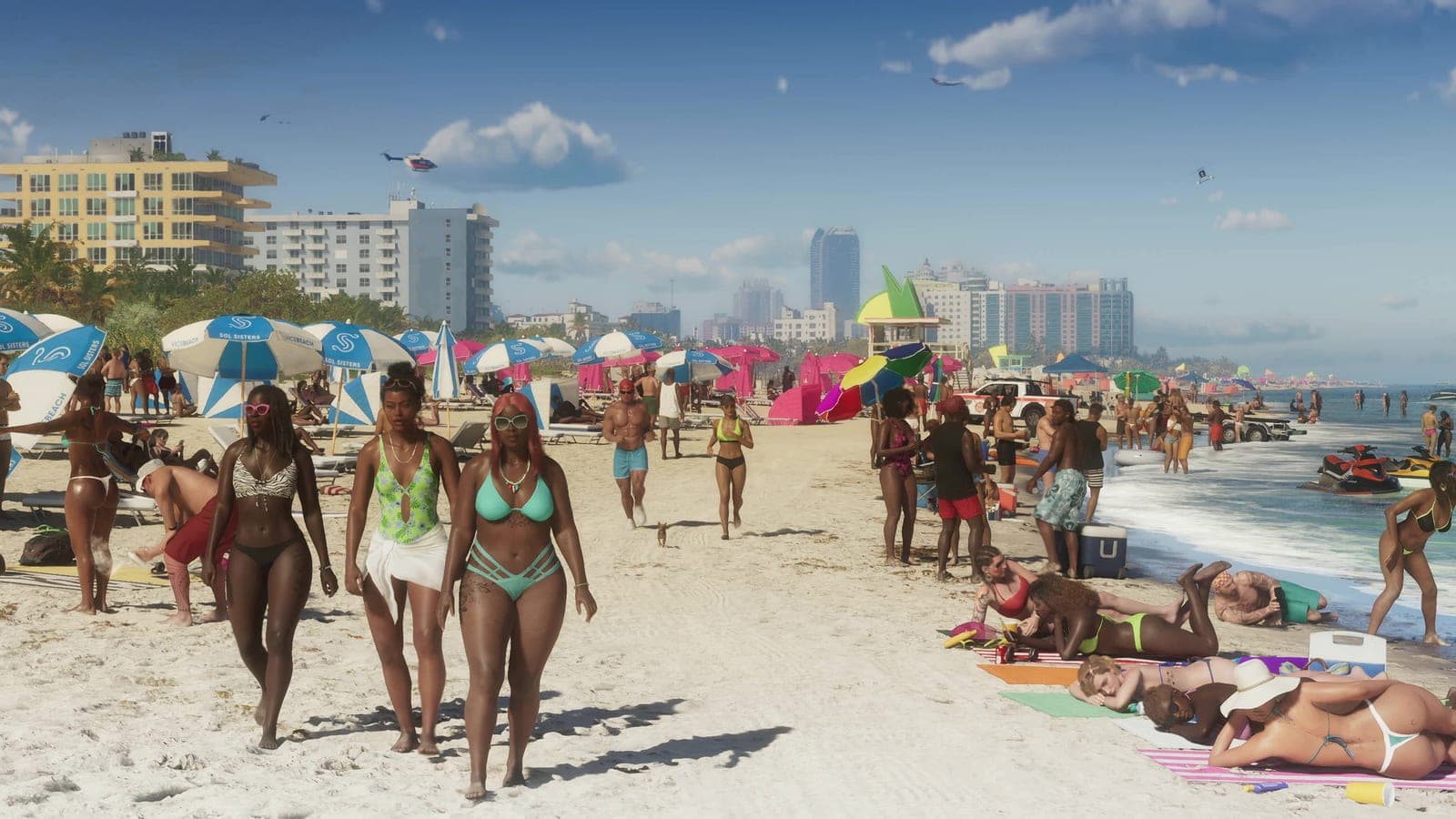
GTA 6's launch trailer, measured: the same 1440p, no QSSR, and a judder that has been there since 2008
Digital Foundry put the Grand Theft Auto VI launch trailer through a frame-by-frame analysis on 16 October. It found no resolution drop, no sign of the PlayStation 5's new QSSR upscaler, and a RAGE engine animation fault going back to GTA IV that now appears to be gone. Here is what a compressed 90-second video can establish, and what it cannot.

Germany, Japan and Korea have now rated GTA 6 — and the last three labels are the ones with teeth
The USK classified Grand Theft Auto VI on 13 September and nobody noticed for a month. CERO's Z appeared on the Japanese store pages on 17 October, and Korea's new private board cleared it on the 16th. That completes the set — but "adults only everywhere" is not what has happened.
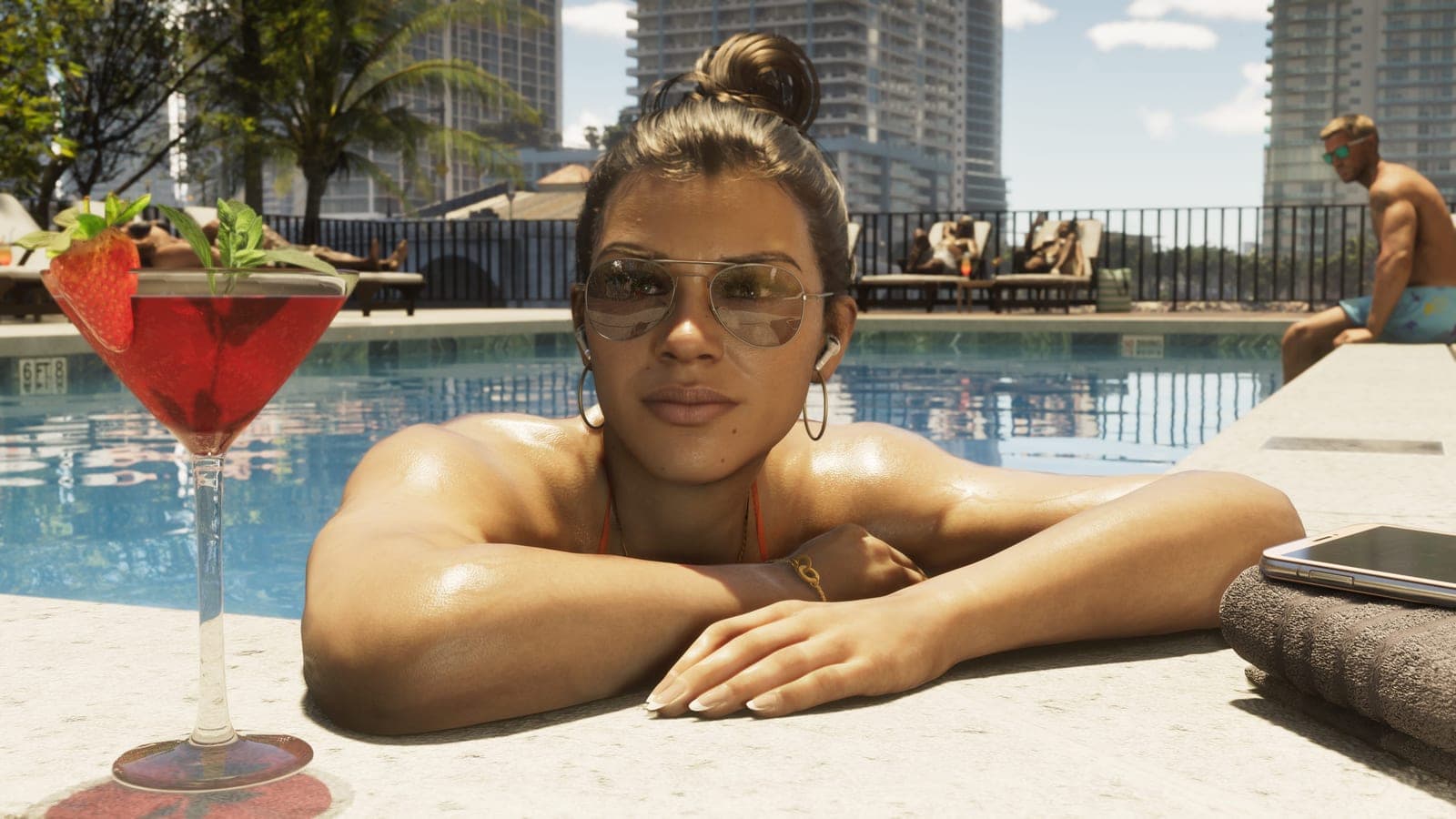
Two guns are missing from GTA 6's banner outside Paris — and the law being cited is about something else
A banner reproducing the Grand Theft Auto VI cover art has gone up on the Mercuriales towers at Porte de Bagnolet with Lucia's pistol and an assault rifle removed. Rockstar has said nothing. France's 1985 firearms advertising law governs adverts for guns, not guns in adverts, and the claim that every GTA 6 poster worldwide has been edited rests on nothing solid.