The $1 billion GTA 6 sick day: where the number came from, and what it actually measures
A projection that 1.5 million Americans will skip work on 19 November and cost the US economy $1 billion is running everywhere. It is one economist's estimate, not a survey finding — and the two figures printed alongside each other do not multiply together. What the real survey asked, and what Rockstar has said about any of it.
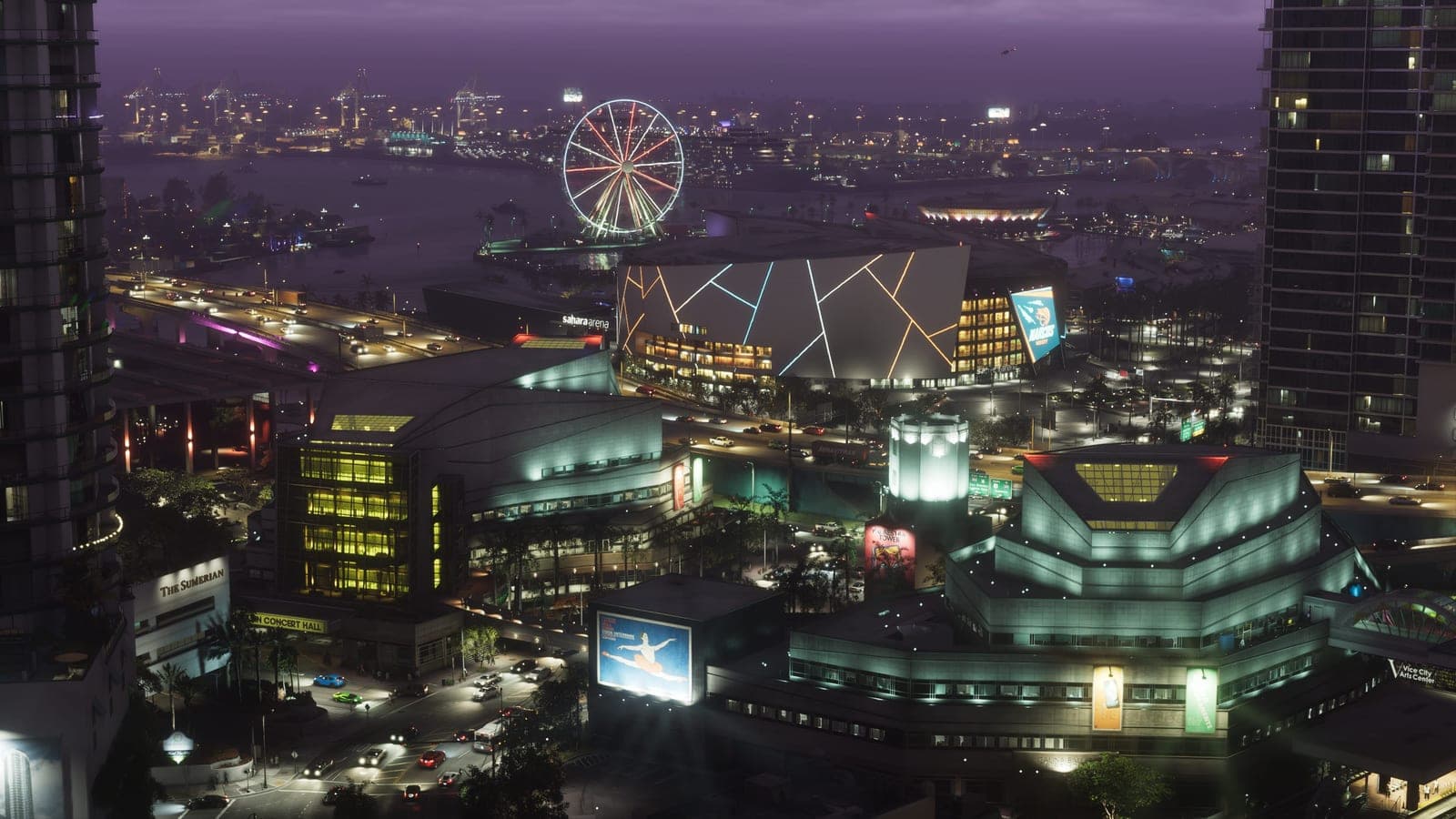
A single figure has been attached to Grand Theft Auto VI's launch day for the past fortnight: 1.5 million Americans calling in sick on 19 November, costing the United States economy about $1 billion. GameSpot carried it on 21 October. So did The Hill, Fast Company, and a long tail of local television stations repeating the wire copy.
The number is not a fabrication, and the people quoting it are not inventing a source. But it is not what the headlines imply. It is one academic's back-of-envelope projection, not a measurement, not a forecast, and not a finding of the employer survey it is usually printed next to. And the inputs as published do not produce the output as published.
This is not a Rockstar story at all. Neither Rockstar nor Take-Two has said anything about launch-day absence, and nothing here changes a single published fact about the game.
The claim, and who made it
The $1 billion estimate is credited to José García Montalvo, professor of economics at Pompeu Fabra University in Barcelona. As relayed by GameSpot, the calculation multiplies roughly 1.5 million absences by what an individual worker contributes over a year, with the per-worker figure given as $70,000 a year.
GameSpot was explicit about the status of this: it is an academic projection, not an official forecast. That caveat survived into very little of the coverage downstream.
The same piece makes a point worth keeping, because almost nobody repeating the headline does: the money is not destroyed. A worker who stays home to play has moved money to Take-Two rather than burned it, and a day of consumer spending is not a crater in national output. "Cost the economy" is doing a great deal of unearned work in these headlines.
The arithmetic, as published
Take the two numbers printed in the same sentence and multiply them.
| Step | Figure |
|---|---|
| Absences assumed | 1,500,000 |
| Annual output per worker, as reported | $70,000 |
| Full-time working days in a US year | about 250 |
| Output per worker per working day | about $280 |
| 1.5 million × $280 | about $420 million |
That is roughly 40% of the headline. For 1.5 million one-day absences to total $1 billion, each absent worker would have to account for about $667 of output that day — around $167,000 a year, not $70,000.
That second figure is not a wage. It is close to what the United States produces per employed person once you divide national output by the number of people working. So the most likely reading is that the $1 billion uses output per worker while the $70,000 quoted beside it is an earnings figure, and the two have been welded together somewhere in the retelling. That is our inference, not a statement from Montalvo: no full method has been published, and we could not obtain one.
Either way, the sentence as printed is internally inconsistent. Two numbers that are presented as one calculation do not multiply into each other.
What the survey actually measured
Separately from the projection, there is a real survey, and it is the source of most of the percentages in circulation. It was commissioned by GameSquare and conducted by Pollfish, polling 1,000 full-time US employees who identify as gamers, with a reported margin of error of 3%.
| What was asked | What came back |
|---|---|
| Plan to skip work on launch day | 10% |
| Considering taking time off | 30% |
| Of those considering it, would call in sick | 36% (one relay reports 35%) |
| Expect to be less productive at work | 42% |
| Plan to buy the game | 84% |
| Average expected spend on the game and related items | about $400 |
Read that first row carefully. The survey's own launch-day skipping figure is 10% of a sample of a thousand employed gamers. It is not 1.5 million people, it is not a share of the American workforce, and it measures what respondents said they intended to do a month in advance.
The 1.5 million figure does not appear in these results. How anyone gets from a percentage of surveyed gamers to a national headcount has not been published — it requires a figure for how many employed American gamers there are, and nobody quoting the number has shown theirs.
Where the reported figures disagree
The coverage does not agree with itself, which is the clearest sign that it is being relayed rather than read.
- The base of the sick-call figure moves. The careful version is that 30% were considering time off and 36% of that group would call in sick — which is about 11% of the sample, not 36% of it. Other write-ups print 36% flat, as though a third of all employed gamers intend to lie to their employer.
- A second set of numbers appears attributed to Fast Company: 39% planning to request time off, 36% calling in sick, 32% working from home. The 39% does not reconcile with the 30% above, and we could not establish which question each belongs to.
- A "roughly 2% productivity decline" appears in several accounts without a base. Two per cent of what — the day's national output, the technology sector, or the absent workers' own output — is not stated anywhere we could find.
There is also a British survey, run in September by One Day Agency and reported by Workplace Journal, which is a useful corrective: 15% of workers said they could call in sick if they were unable to book leave, while only 2% said calling in sick was actually part of their plan. The gap between what people will admit as a hypothetical and what they intend to do is the whole problem with this genre of number.
The 2013 precedent
GameSpot reaches for the obvious comparison: an IGN reader poll in 2013, before GTA V, in which 46% said they would take a "GTA flu" day.
That is a self-selected poll of the readership of a games website, answering before the fact. It tells you what enthusiasts enjoyed saying in 2013. No one appears to have gone back afterwards and measured what happened, which is why the 2013 figure is still being quoted as evidence thirteen years later instead of being replaced by an observation.
What is not confirmed
| Status | |
|---|---|
| 1.5 million Americans will miss work on 19 November | A projection. Not a survey result, derivation unpublished |
| The launch will cost the US economy $1 billion | An estimate, inconsistent with the per-worker figure quoted beside it |
| The GameSquare percentages | Real survey data, 1,000 employed gamers, stated intentions — not the workforce, not behaviour |
| Any Rockstar or Take-Two comment on launch-day absence | None. Neither company has said anything |
| A government or agency forecast of launch-day losses | Does not exist |
| What time the game actually unlocks | Still not announced |
The practical part
If you are among the 10%, there is a planning problem these articles never mention: nobody yet knows what time the game starts.
Rockstar has confirmed 19 November and has confirmed that preload opens on 12 November, but it has not confirmed an unlock time, and the evidence from store listings points to midnight local rather than a single global moment. A day booked off on the strength of a guess about the hour is a day that may be half-spent waiting. That page will be updated the moment there is an announcement.
The $400 average spend in the survey is worth a sanity check too, since it is roughly the price of the merchandise box rather than the game: what the game itself costs, and what each edition actually includes, is a shorter list than the number suggests.
A note on sourcing
Rockstar's own site and most of the games press are unreachable from where this was written, so the figures above are taken from the outlets named — GameSpot of 21 October for the projection, and reporting of the GameSquare release for the survey. We have not read Montalvo's original statement or the GameSquare release first-hand, and where accounts of the same number differ, both readings are given above rather than one being chosen.
Read next
The GTA 6 system that almost never got pitched: how a 2014 prototype shaped Vice City's crowds
Rockstar's NPC interaction system — the thing that decides what a stranger does when you walk up to them — was built as a side prototype in 2014, and the lead who saw it first did not want to show it upstairs. Here is the twelve-year history Jason Schreier's follow-up video put on the record, and what it still does not tell you about Grand Theft Auto VI.
GTA 6 beer: Pißwasser, Patriot and No Mames Vice City have US label approval
Three beer labels carrying Grand Theft Auto VI brand names cleared the US federal alcohol database under a Miami brewery. The certificates are real and public. What they do not contain is a licence, a date, a price, or any statement from Rockstar.
GTA 5 leaves PS Plus on 17 November, two days before GTA 6 arrives
Sony's November removals take Grand Theft Auto V and Red Dead Redemption 2 out of the PlayStation Plus Game Catalog on 17 November 2026, 48 hours before GTA 6 launches. Here is what the removal takes away, what it leaves alone, and why the obvious reading of the timing is weaker than it looks.