Rockstar's mod guidelines: what the new rules ban, and what they change for GTA 6
Rockstar has published a company-wide modding policy that forbids fan-made story expansions, cross-game map merges and unofficial ports, and limits multiplayer modding to one licensed platform. It covers Grand Theft Auto VI — a game with no PC version announced.

Rockstar has written down, for the first time since 2017, what it will and will not tolerate from people who modify its games — and the list is longer than the one it gave nine years ago. A page headed Mod Guidelines now sits under the community resources section of rockstargames.com. It carries a date of 10 September 2026, it applies to every Rockstar title rather than to any single game, and Rockstar published no Newswire post announcing it. It was picked up by the press in the week of 19 September.
The headlines it produced have mostly been about Grand Theft Auto VI, which is the one framing the document does not support: it names no game. What makes it a GTA VI story is timing and scope, not text. This piece sets out what the page actually says, what changed against the assurance Rockstar gave modders in 2017, and the answer to the only question most readers have — whether any of it affects the game you will be playing on 19 November 2026. It does not.
Where it stands
| Status | |
|---|---|
| A company-wide Mod Guidelines page on rockstargames.com | Confirmed, dated 10 September 2026 |
| It applies to all Rockstar titles, not to GTA VI specifically | Confirmed — the page names no game |
| Single-player modding still permitted, with conditions | Confirmed |
| Multiplayer modding restricted to Rockstar's licensed Creator Platform | Confirmed |
| A Newswire post, press release or developer statement explaining it | Nothing published |
| Any mod named as being in breach, or any takedown announced under it | None |
| Official mod support for GTA VI | Not announced |
| A GTA VI PC version, on which any of this could apply | Not announced |
What the page forbids
The substantive section is headed Respect Our Games, and it is where the new ground is. Four prohibitions in it go beyond anything Rockstar had previously stated in public.
No fan-made story. Modders are told not to expand or modify Rockstar's "official storylines, plots, missions, characters, or other elements of our established continuity". Read plainly, that covers the entire category of story expansion mods — new missions, new campaign chapters, rewritten endings, added characters in existing narratives.
No merging one game into another. The page forbids combining "maps, locations, characters, storylines, in-game assets, or other IP" from one Rockstar title into another. This is the clause aimed at the largest projects in the scene: the long-running efforts to rebuild Liberty City, San Andreas or 2002's Vice City inside GTA V's engine.
No unofficial ports. Modders must not "modify our games to operate on consoles, hardware devices, or other platforms where they have not been officially released by Rockstar Games". That reaches a body of work with real users — the fan-made Nintendo Switch and Android builds of older GTA titles, and the reverse-engineered PC ports of games Rockstar never shipped on PC.
No borrowed voices or faces. Rockstar's own voiceover performances may not be modified or reused, and no real person's voice, image or likeness may be used without written permission. That is the clause that speaks to AI voice cloning, and it is the one part of the page where Rockstar has a demonstrated enforcement history: it had a GTA V mod using generated NPC dialogue pulled from Nexus Mods and YouTube back in 2023.
On money, the rules are absolute outside one channel. All modding must be non-commercial unless it goes through Rockstar's official Creator Platform marketplace, and mods may not carry real-money gambling, loot boxes, gacha mechanics, virtual-currency sales, cryptocurrency or crypto assets, or third-party advertising and sponsorship.
What it still allows
The page is not a ban on modding, and reading it as one gets the story backwards. Single-player mods remain permitted. A car pack, a graphics overhaul, a new weapon, a reshade, a trainer used offline — none of that is touched, provided it respects other people's intellectual property, stays away from online services and is given away rather than sold.
That is worth stating clearly because the categories the page kills are the visible, ambitious ones, which makes the policy look broader than it is. The ordinary business of the GTA V mod scene continues. What VI ships with by way of cars and bikes, before anyone modifies anything, is catalogued on our vehicles page.
The 2017 sentence, and what has been added to it
Until this month the governing text was a single sentence, issued by Rockstar in June 2017 after Take-Two's cease and desist against the modding tool OpenIV triggered a Steam review-bombing campaign and a petition with more than 78,000 signatures. Rockstar's climbdown read:
After discussions with Take-Two, Take-Two has agreed that it generally will not take legal action against third-party projects involving Rockstar's PC games that are single-player, non-commercial, and respect the intellectual property (IP) rights of third parties.
Three conditions: single-player, non-commercial, third-party IP respected. The 2026 page keeps all three and adds four more.
| 2017 statement | 2026 guidelines | |
|---|---|---|
| Single-player only | Condition | Condition |
| Non-commercial | Condition | Condition, unless via the Creator Platform |
| Respect third-party IP | Condition | Condition |
| Altering Rockstar's own story and continuity | Not addressed | Forbidden |
| Combining assets across Rockstar titles | Not addressed | Forbidden |
| Porting to unreleased platforms | Not addressed | Forbidden |
| Reusing Rockstar voice performances or real likenesses | Not addressed | Forbidden |
The 2017 wording was also a statement about what Take-Two would not sue over. The 2026 page is a statement about what Rockstar permits. Those are different instruments, and the second is easier to change.
Multiplayer: one platform, arrived at over three years
The multiplayer clause reads as a tightening and is closer to a description of a situation that already exists. Modded multiplayer is now limited to Rockstar's licensed Creator Platform — built on Cfx.re, the FiveM and RedM team Rockstar acquired in 2023 — or to projects licensed directly by Rockstar. There is nothing else left to permit.
| Date | What happened |
|---|---|
| August 2023 | Rockstar acquires Cfx.re, the team behind FiveM and RedM |
| 12 January 2026 | The Cfx Marketplace opens, making paid mods possible inside the licensed platform |
| February 2026 | alt:V announces it is winding down, saying Rockstar and Take-Two "have made it clear that FiveM is the only authorised platform for GTA V multiplayer modding, as defined in their Platform License Agreement" |
| 25 May 2026 | RAGE MP announces its shutdown after a direct request from Take-Two; the platform goes dark on 31 August |
| 8 September 2026 | nopixel V, the roleplay server rebuilt in partnership with Rockstar, enters closed beta — running through the Rockstar Games Launcher rather than a third-party client |
Set in that order, the guidelines page is the last step rather than the first. The competing platforms were gone before it was written, and the biggest roleplay community in the scene had already moved inside Rockstar's own launcher two days earlier. What the page does is put the arrangement in writing and extend it forward to games that do not exist yet.
What this changes for GTA 6 on 19 November
Nothing, and the reason is simple. Grand Theft Auto VI launches on PlayStation 5 and Xbox Series X|S only, and there is no announced PC version. Console games are not moddable in the sense this page is about: there is no file system to reach, no script loader, no Nexus page. Every prohibition in the document is aimed at a platform GTA VI has not been announced for.
So the practical effect on launch day is zero. The effect is prospective, and it depends entirely on a release Rockstar has not committed to — the pattern from GTA V and Red Dead Redemption 2 points at a PC version somewhere in late 2027 to mid 2028, and a pattern is not a date. Whenever that arrives, this is the policy the mod scene will be working under, and the document was clearly written with it in mind.
There is a second-order point worth noticing. The cross-title clause forbids importing Rockstar maps into one another in either direction — so a Leonida rebuilt inside GTA V is as far out of bounds as a Los Santos rebuilt inside VI. Whatever the map turns out to contain, it is not going to be legitimately merged with anything.
The same logic applies to the other question people keep attaching to this. A modded multiplayer scene built on VI would need a licensed platform to exist on, and there is no GTA VI Creator Platform, no announced online mode and no successor to GTA Online of any kind. The guidelines describe rules for a thing that has not been built.
What is not confirmed
- That anything has changed in practice. No mod has been named as being in breach, and no takedown has been announced under the new page. It may be a written statement of existing enforcement rather than a new posture.
- Whether the 2017 assurance still stands. The page does not mention it, withdraw it or reaffirm it. Rockstar has said nothing about how the two documents relate.
- Whether GTA VI gets official mod support. No Creator Platform for VI has been announced, on any platform, at any date.
- A GTA VI PC version. Still unannounced. Everything in this policy is contingent on it.
- How the guidelines will be enforced. No takedown process, appeal route or penalty is described in what has been reported of the page.
- Rockstar's reasoning. There has been no Newswire post, no developer comment and no interview. The document arrived without a word of explanation, which is why its date went unnoticed for over a week.
The honest summary is that this is a document about the future that was published quietly in the present. It does not touch the game you buy in November, on the hardware you buy it for. It matters on the day Rockstar announces a PC version — and until they do, it is a set of rules waiting for a platform to apply to.
Read next
The Rockstar tribunal: what a Glasgow courtroom has revealed about GTA 6
Rockstar dismissed 34 staff across its UK and Canadian studios on 30 October 2025. Thirty-one of them are now in front of an employment tribunal in Glasgow that runs until mid-October, and Rockstar's own filings have become the first place the studio has ever referred to a GTA VI online format.
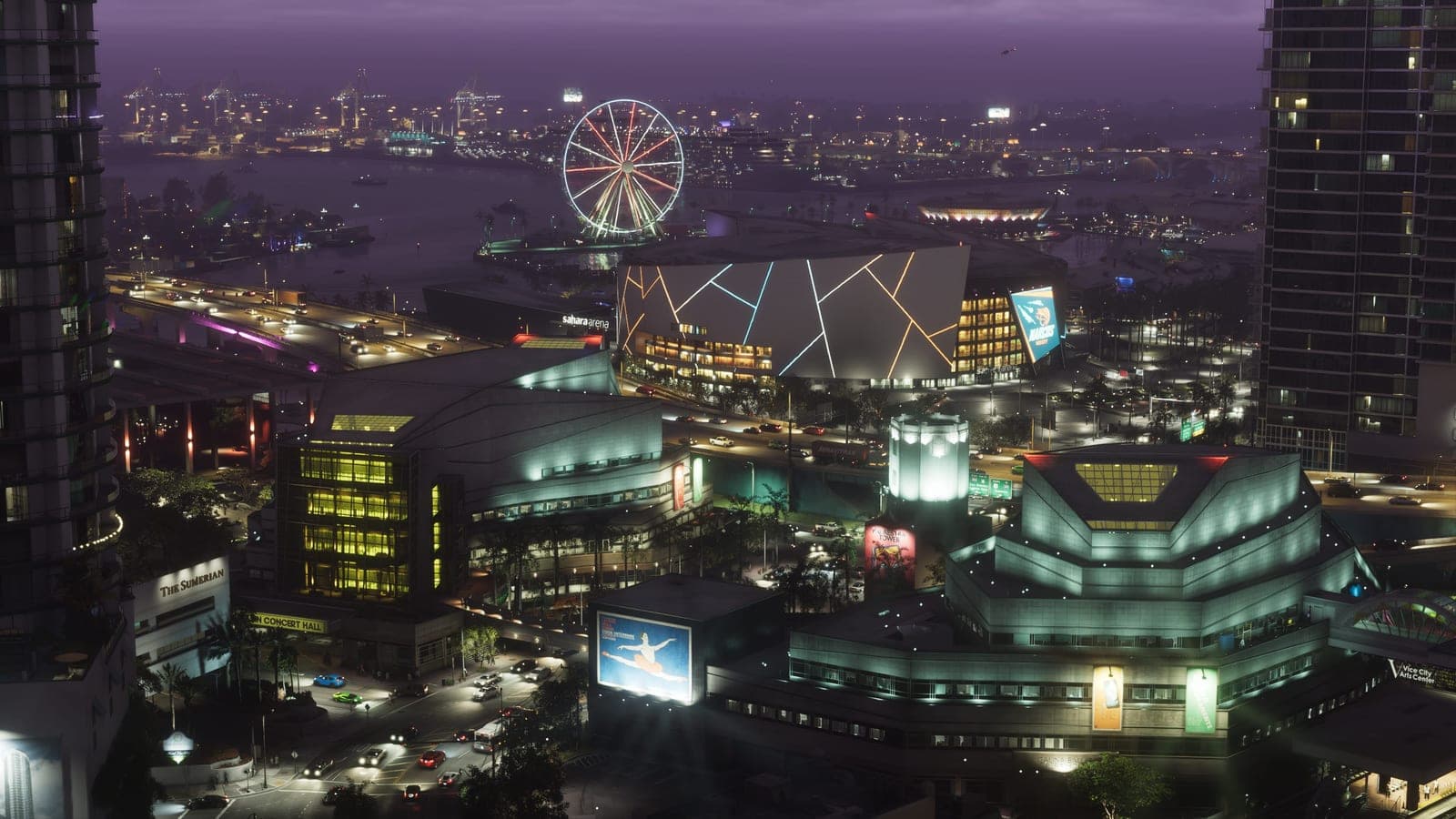
Miami is being turned into Vice City: the rooftop sign, the beach deal, and who signed them
A helicopter lifted WELCOME TO VICE CITY onto the roof of the Miami Heat's arena on 22 September. Miami-Dade County is collecting $975,000 for it, Miami Beach has voted 4-3 to take at least $3 million more, and Rockstar has said nothing publicly about either. Here is what the public records actually show.
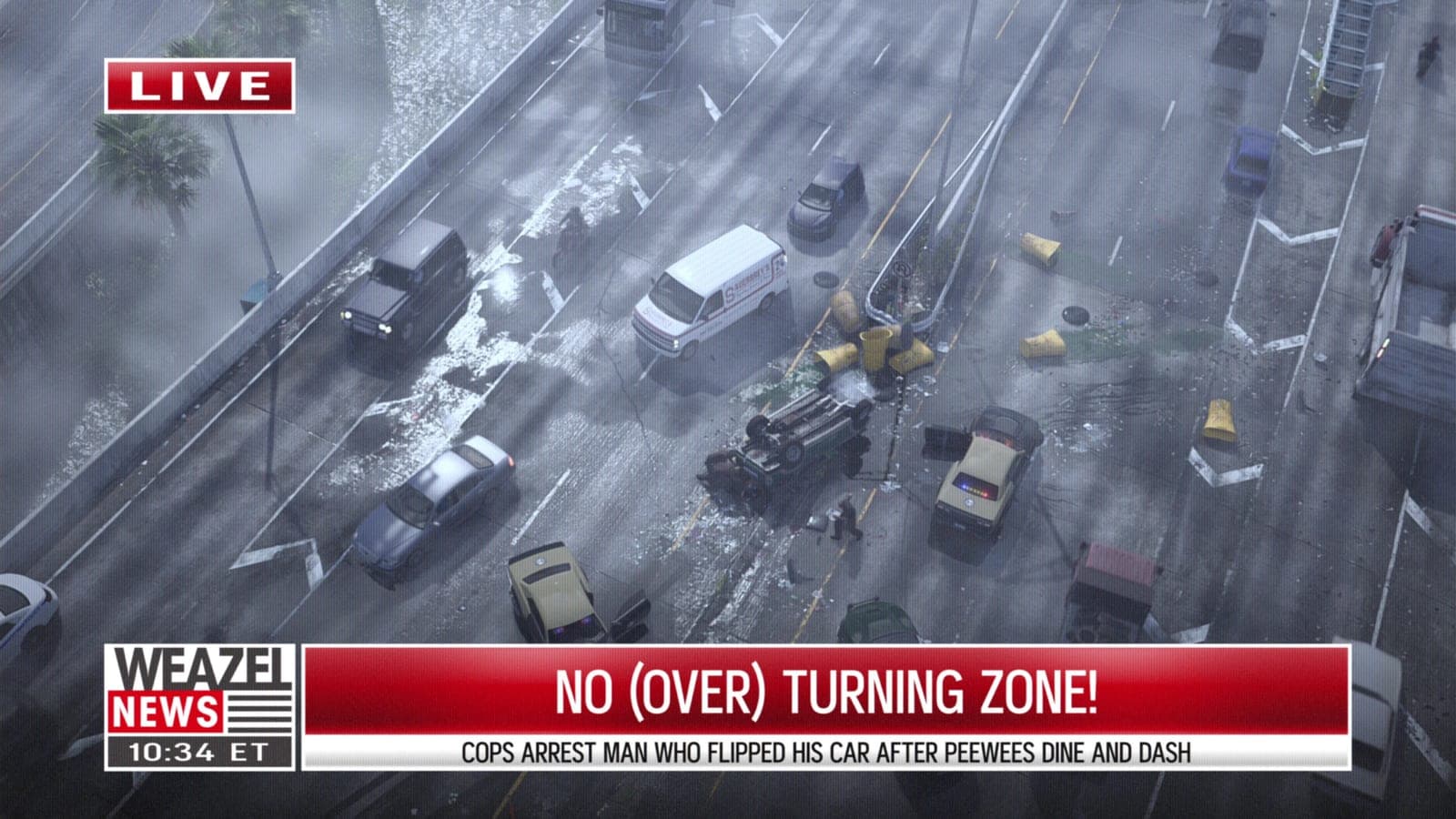
GTA 6 police and wanted levels: six stars, heat icons, and what the cops know about you
Six wanted stars are back, and underneath them sits a row of icons showing exactly what the police have on you — your face, your clothes, your car, your partner, the CCTV. Here is how the heat system works in Grand Theft Auto VI, and what Rockstar still has not said.