GTA 6 NPC personality traits: the five things Edge says decide whether a stranger runs or fights
Edge issue 430 names the inputs to Grand Theft Auto VI's pedestrian personality system — temperament, aggression, where someone is, what they have seen and how you have treated them — and says districts carry their own demographic and professional textures. What that actually adds, why the 600,000-animation figure is not new, and the reading several write-ups got wrong.
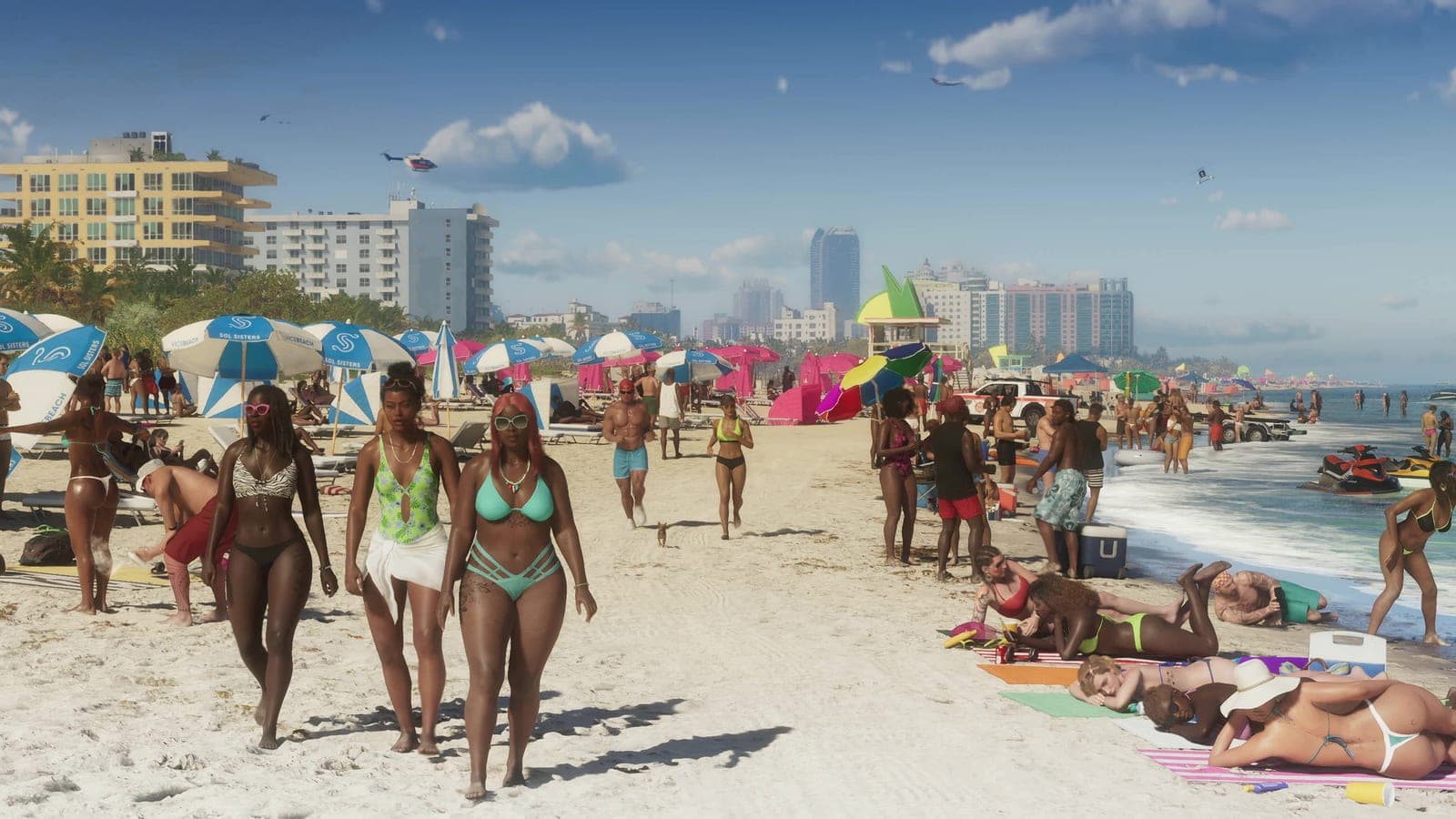
For the first time, somebody has named the things that decide what a pedestrian in Grand Theft Auto VI does when you walk up to them. Edge issue 430 describes a personality system attached to the people on the street, and lists five inputs: temperament, aggression, where they are, what they have seen, and how the player has behaved towards them.
That is a short list, and it is the most anyone outside Rockstar has been given about a system the studio has been pointing at for a year. It is also being reported alongside a figure that is eleven weeks old, and underneath a phrase — "demographic and professional" — that several write-ups have read as something it does not say.
What was actually said
| Claim | Status |
|---|---|
| Pedestrians carry personality traits that shape how they respond | Reported from Edge 430 |
| The inputs: temperament, aggression, location, what they have seen, how you have treated them | Reported from Edge 430 |
| Neighbourhoods differ in the residents and workers they contain — "demographic and professional" textures | Edge's phrasing, relayed by PC Gamer |
| Some pedestrians confront you instead of fleeing; some reach for a weapon | Rob Nelson, in Edge 430 |
| Staring at someone too long can provoke them | Reported from Edge 430 |
| "Who's going to be aggressive? How many people are going to go for a weapon? How many are going to test me?" | Nelson, quoted |
| Around 600,000 animations | Not new — on the record since August, from Aaron Garbut |
| How many traits exist, or what range any of them has | Never published |
| Whether traits are authored per NPC or sampled from a pool | Not described |
| Whether a pedestrian remembers you after you walk away | Still not claimed by anyone at Rockstar |
| Any change to the 19 November release date | No |
The five inputs, and what a list is not
Set out plainly, the system as described takes two things that belong to the NPC and three that belong to the situation:
| Input | Belongs to |
|---|---|
| Temperament | the person |
| Aggression | the person |
| Where they are | the place |
| What they have seen | the moment |
| How you have behaved towards them | you |
That split is the interesting part. Two of the five are not properties of the pedestrian at all, which means the same character model can be placid on one street and hostile on another without anything about them changing. It is the difference between a crowd of fixed personalities and a crowd of people responding to a situation, and the list says Rockstar is doing both at once.
What the list is not is a specification. No number attaches to any of it. Nobody has said how many traits exist, what scale aggression is measured on, whether "what they have seen" persists for ten seconds or ten minutes, or whether two pedestrians standing together share what one of them witnessed. A named variable is not a described mechanic, and the gap between the two is where most of this game's reporting has gone wrong for two years.
The phrase doing the most work
PC Gamer put "demographic and professional" in its headline, in quotation marks, and the phrase has travelled further than the sentence it came from. It is worth separating the two readings, because only one of them is sourced.
What Edge describes is a property of places. Different districts contain different mixes of residents and workers — a marina has boat crews, a business strip has office workers, a nightlife block at 2am has a different population from the same block at noon. That is a statement about who is standing in a neighbourhood.
What some secondary coverage has turned it into is a property of people — that an individual pedestrian's apparent age, job or background is what determines whether they square up to you. Nobody at Rockstar has said that, it is not in the Edge text as any permitted outlet has relayed it, and it is a considerably larger claim than the one on the record.
The distinction matters beyond pedantry. The first version is set dressing with behaviour attached: populate a district plausibly and the behaviour follows from who happens to be there. The second would be a system that reads a person and predicts their temper from it. Those are different designs, and only one of them has a source.
This is the district claim moving from how people look to what they do
Rockstar confirmed months ago that Leonida carries several designed populations rather than one pool sampled everywhere: residents of Little Cuba look and dress unlike the people around Mount Kalaga, and beach crowds are not the pedestrians you pass downtown. We set that out, with the production claims behind it, in the world density breakdown.
Edge 430 does something narrower and more useful to that claim. It attaches the variation to behaviour rather than to appearance. Until now, "populations differ by region" was a statement about wardrobe, body type and casting. The personality list puts where they are among the five inputs, which makes the district a term in how a stranger reacts rather than only in how they are dressed. If that holds, walking the same provocation through two of Vice City's named districts should produce two different afternoons.
It has still not been demonstrated. Edge watched a demonstration at Rockstar North rather than playing, and nobody outside the studio has stood in two districts long enough to compare how anyone reacted.
The 600,000 figure is not news
Both headlines carrying this story lead with the animation count, and it is worth saying clearly: that number has been public since August. Aaron Garbut gave it to the New York Times — well over 600,000 animations, against 55,000 in GTA V and 300,000 in Red Dead Redemption 2 — and it has been in our world density piece ever since. Edge restating it is a magazine repeating a known figure, not a second confirmation and not a new one.
What is genuinely new in this cycle is the list of five, the district-to-behaviour link, and one small concrete thing: staring at a pedestrian for too long can provoke them. That is the first specific trigger anyone has named. Everything else on the record has been the shape of the system rather than a thing you can do to set it off.
Nelson's argument for why any of this exists
The design reasoning Edge reports is a believability argument, and Rob Nelson makes it in the bluntest available terms: if you can produce an automatic shotgun in the middle of a crowd and nobody reacts, that does not work.
Who's going to be aggressive? How many people are going to go for a weapon? How many are going to test me?
Read as design notes rather than as a feature list, those three questions describe populating a street by deciding its distribution — what proportion of a crowd does each thing — rather than scripting individuals. That is consistent with the reversal Nelson has described before, where a pedestrian you crowd in VI may escalate instead of running, and it puts the pedestrian on the same axis as the lethal and non-lethal options in combat: the choice to draw something from the weapon roster in public is itself an input to what the street does next.
It is also the clearest statement yet of why the interaction system was worth twelve years of work. It began as a 2014 side prototype that very nearly went unpitched — that history is its own piece — and the thing it has grown into is, on this account, a crowd that can be wrong-footed.
What is still not confirmed
Whether an NPC remembers you. This is the claim that will not die, and the Edge feature does not revive it. "What they have seen" is listed as an input, but nothing in any relayed account says how long a pedestrian holds it, whether it survives you leaving the area, or whether a second encounter is treated as a second encounter. Rockstar has described NPCs reacting; it has still not described them remembering, and the persistent-memory story remains traceable to Reddit posts rather than to anyone at the studio.
The size of the system. No trait count, no scale, no indication whether a pedestrian's personality is authored or rolled. Five named variables with no values attached is an outline.
Whether any of it survives a crowd. Every account of this system describes one player and one stranger. What happens when the street is as full as the beach crowds Rockstar has shown in its own trailers — whether traits still resolve individually at that density, or whether the crowd falls back to a simpler model — has not been addressed by anyone.
Whether police behaviour runs on the same inputs. The wanted system has its own documented logic of heat areas and identifying features. Nothing says the pedestrian personality model and the police model share anything, and it would be an assumption to treat the two as one system.
Where any of this happens. No district has been named in connection with a behaviour, in Vice City or anywhere else across the state. "Districts differ" is the whole of it, and Vice City is one region of several.
Grand Theft Auto VI ships on 19 November 2026, eighteen days from today — see the release date and its history. The pedestrian system is the part of this game Rockstar has spent the longest gesturing at and the shortest time describing, and a list of five words is still, remarkably, the most detailed account of it in public.
Sourcing note: rockstargames.com, pcgamer.com, gamesradar.com, kotaku.com, gamespot.com and videogameschronicle.com all fail to resolve from this writer's network, so Edge issue 430 could not be read first-hand on paper or online, and nothing here comes directly from Edge or from Rockstar. The five inputs, the "demographic and professional" phrasing and the district variation are carried as PC Gamer reported them from the feature on 29 October. The trait list as temperament, aggression and player behaviour, the flee-or-confront outcomes, the provocation-by-staring detail and Nelson's three questions are carried as GamesRadar reported them from the same feature; GamesRadar publishes Edge, which makes it the closest thing to the text available here. The 600,000-animation figure is Aaron Garbut's, given to the New York Times in August and already covered on this site; it is repeated in Edge and is not a new confirmation. Rob Nelson's title is given as co-studio head of Rockstar North. Rockstar has not posted about the feature on its Newswire. No leaked material was used and none is described.
Read next
GTA 6's day/night cycle is longer than GTA 5's — and Rockstar has not said by how much
Rockstar built Vice City, ran it on GTA 5's clock, and found that everything felt too fast. Rob Nelson's Edge interview says the day/night cycle was lengthened as a result. Here is what that does and does not establish, and why the minute figure in circulation is not one we will print.
GTA 6 public transport: working buses and trains, and the bus the police will not search
Edge issue 430 says Leonida has a fully functioning train system and bus routes across the state, and that a Rockstar development lead rides them in playtesting to check they turn up. Here is what that confirms about public transport in Grand Theft Auto VI, what the claim about losing the police on a bus actually says, and the long list nobody has answered.
GTA 6's police send dogs after you, and the criminal profile has a name at the bottom
Edge's demo put a K9 unit on Jason after a motorcycle crash, and Rob Nelson described a criminal profile running from Professional to Irredeemable. Two systems this site has tracked since September have moved — and one open question about the feature itself is now answered.