The GTA 6 hacker's second trial: Arion Kurtaj is listed for court ten days before launch
Arion Kurtaj has never been convicted of the 2022 Rockstar hack. A jury decided only that he did the acts, and he was detained indefinitely. Reports now place a conventional criminal trial on 9 November 2026 — here is the statutory route that gets him from a secure hospital to a dock, what the 2025 appeal settled, and what is still unconfirmed.
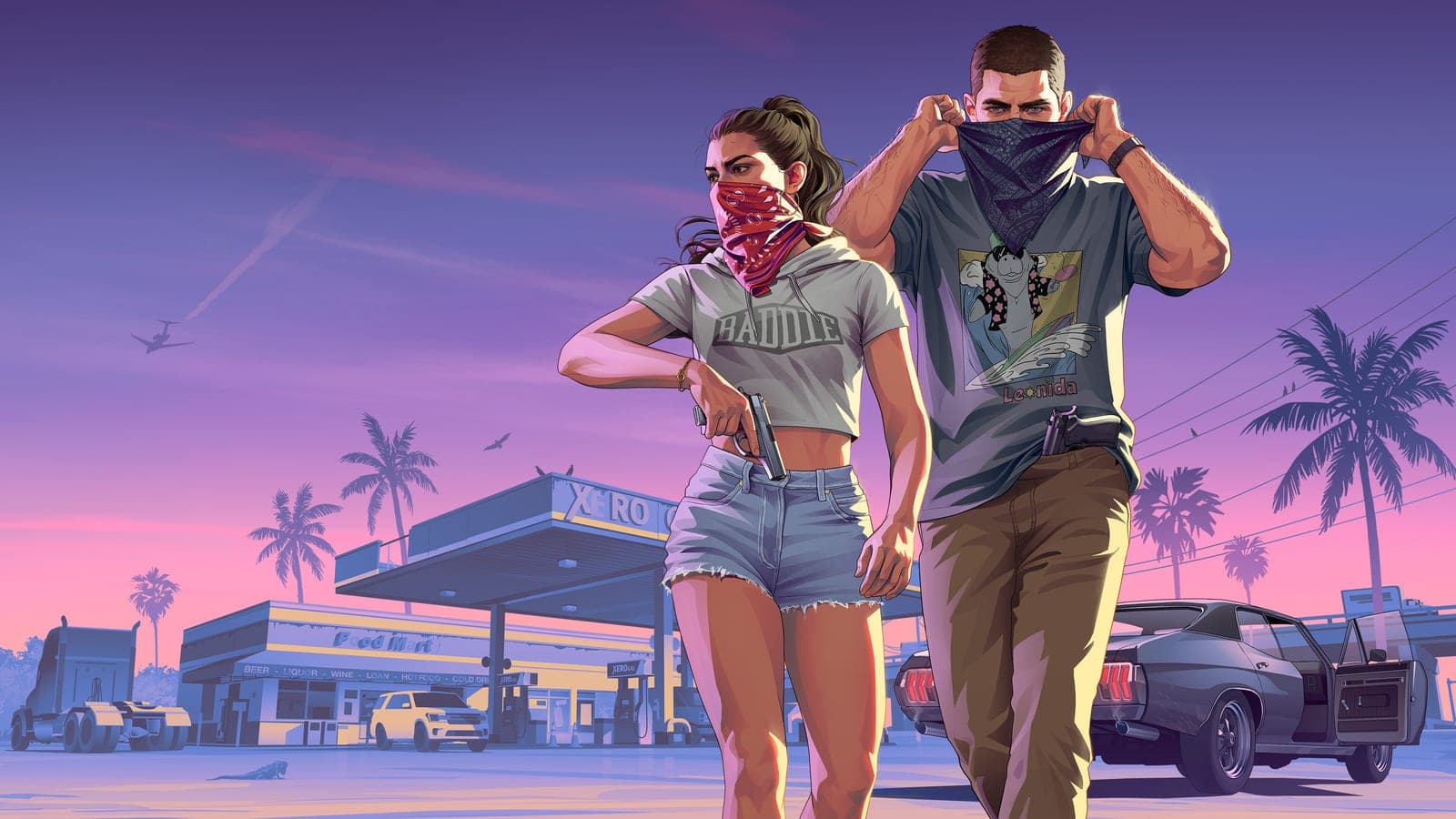
The man a jury found responsible for the September 2022 Grand Theft Auto VI leak is reported to be listed for a conventional criminal trial on 9 November 2026, ten days before the game he leaked goes on sale. The listing surfaced on 10 October from the chambers representing him, and the games press carried it the same day.
Two things about that sentence need stating immediately, because almost every report compresses them out. Arion Kurtaj has not been convicted of anything. And the November date has not been confirmed by the court, by the Crown Prosecution Service or by anyone else with access to a published listing — it comes from his own defence team.
What is solid is the machinery underneath, which is a matter of statute and a published Court of Appeal judgment. That is what this piece sets out: how a man held under an indefinite hospital order in December 2023 arrives at an ordinary criminal trial in November 2026, what the 2025 appeal did and did not decide, and what a second trial could produce that the first one could not.
Where it stands
| Status | |
|---|---|
| That Kurtaj has been convicted of the Rockstar hack | No. A jury found he did the acts; that is not a conviction |
| Moved from a secure hospital to an ordinary prison | Reported by the BBC's cyber correspondent Joe Tidy, July 2026 |
| A conventional criminal trial in November 2026 | Reported July 2026, from the same source |
| The date of 9 November, and Woolwich Crown Court | Reported 10 October from his barristers' chambers. Not matched to a published court listing |
| Any comment from the CPS, the police, Rockstar or Take-Two | None |
| Any stated connection to the 2026 leaks | None |
| Any effect on the 19 November release date | None announced |
A finding is not a conviction
This is the part that four years of headlines have flattened, and the whole story depends on it.
Kurtaj was assessed as unfit to plead. Under section 4A of the Criminal Procedure (Insanity) Act 1964, a defendant in that position does not stand trial in the ordinary sense. A jury is asked one narrow question — did he do the act? — and is not asked whether he did it with the mental element the offence requires. There is no verdict of guilty, no verdict of not guilty, and no conviction at the end of it.
In August 2023 a jury at Southwark Crown Court returned findings against him on twelve counts, among them blackmail, fraud and offences under the Computer Misuse Act, covering attacks on Rockstar, Uber, Nvidia and BT among others. On 21 December 2023 he was made the subject of an indefinite hospital order with a restriction order attached: detention in a secure hospital until doctors judge he is no longer a danger, the judge citing an assessment that he intended to return to cybercrime as soon as he could. The full sequence of the 2022 leak is documented separately, including what the files actually contained — a diner robbery played as Lucia, a Vice City Metro ride, and fragments of streets and test scenes.
So the disposal in 2023 was a hospital order made on the back of a finding of fact. Nothing was decided about criminal responsibility, and nothing could be, because he was not fit to answer it.
How an indefinite hospital order ends in a trial date
The answer is a provision almost nobody outside mental health law has read: section 5A(4) of the same 1964 Act.
It applies in exactly the situation Kurtaj is in — a person detained under a hospital order made after a section 4A finding, with a restriction order still in force. In that case the Secretary of State may send the person back to the court or to a prison for trial, but only on being satisfied, after consulting the responsible clinician, that he can properly be tried. On arrival, the hospital order and the restriction order cease to have effect.
That is the whole route, and it explains the only part of this story anyone has actually observed. In July 2026 Joe Tidy reported that Kurtaj had left the secure hospital and was being held in an ordinary prison awaiting trial, after reporting restrictions were lifted at his request. PC Gamer and GamesRadar both carried it. A transfer from hospital to prison is not an administrative detail in this scheme; under section 5A(4) it is the step that requires a clinician to have been consulted and a minister to have been satisfied, and it is the step that strips away the hospital order.
The practical consequence is large. A conventional trial can end in a conviction and a sentence, or in an acquittal. The 2023 proceedings could produce neither.
What the Court of Appeal settled in 2025
There is one more piece of public record, and it is the piece the coverage has missed almost entirely.
In R v Kurtaj [2025] EWCA Crim 1163, heard in April 2025 and handed down in September, the Court of Appeal considered a challenge to the section 4A findings. It held that evidence of earlier convictions based on guilty pleas — entered at a time when nobody had considered whether he was fit to plead at all — ought to have been excluded from the 2023 hearing. Leave to appeal was granted on that ground.
The appeal was nonetheless dismissed. The court found that admitting that material did not render the jury's findings unsafe, given what it described as very strong independent evidence. The judgment also dealt with a procedural question of some significance beyond this case: that representatives appointed under section 4A have authority to seek leave to appeal and to renew to the full court without a fresh appointment.
So the 2023 findings stand. They were not quashed, and the November trial — if it happens — is not a retrial ordered by an appeal court. It is a separate thing: the trial that could not be held in 2023, now reportedly possible because the clinical position changed.
What this has to do with the game
Nothing that has been announced, and that is worth saying plainly because the proximity of the dates invites the opposite assumption.
The release date is unchanged. Rockstar and Take-Two have said nothing about the listing. The case concerns a build of the game from 2022 that is four console-years out of date, and the material at issue has been overtaken many times over by Rockstar's own trailers, the Extended Look and the stills it has published since.
Nor is there any stated connection to the leaks of 2026. That is a different actor, different material and a different legal track — a run of American DMCA subpoenas rather than a British prosecution, and we have set out what Take-Two has actually asked the courts for. The only link between the two is the subject matter.
What is not confirmed
- The date. 9 November and Woolwich Crown Court come from the defence chambers' own post, relayed by outlets that do not have court listings. No independent confirmation exists.
- That the trial goes ahead at all. Trial dates move. A listing in early November is a listing, not an event.
- What the charges will be. Nobody has published the indictment for a trial that has not started. The twelve counts of 2023 are a guide, not a statement of what is now charged.
- That he has been formally found fit to plead by a court. Reporting says he was assessed as fit after treatment, and the move to prison is consistent with section 5A(4). A court's own determination is a separate step and has not been reported.
- Any Rockstar involvement. The company was a victim in 2022 and said so at the time. It has said nothing about November.
- Any effect on 19 November. None announced, and nothing in a criminal listing would plausibly produce one.
What to watch
The honest answer is: a published court listing. Everything else in circulation today traces back to one post by one set of barristers, and the gap between that and a confirmed hearing is exactly the gap this site exists to mark.
If the trial does proceed in November, it will be the first time a court has asked whether the person who took GTA VI's development footage in 2022 is criminally responsible for having done it — four years after the fact, and in the same month the finished game reaches the people it was taken from.
Read next
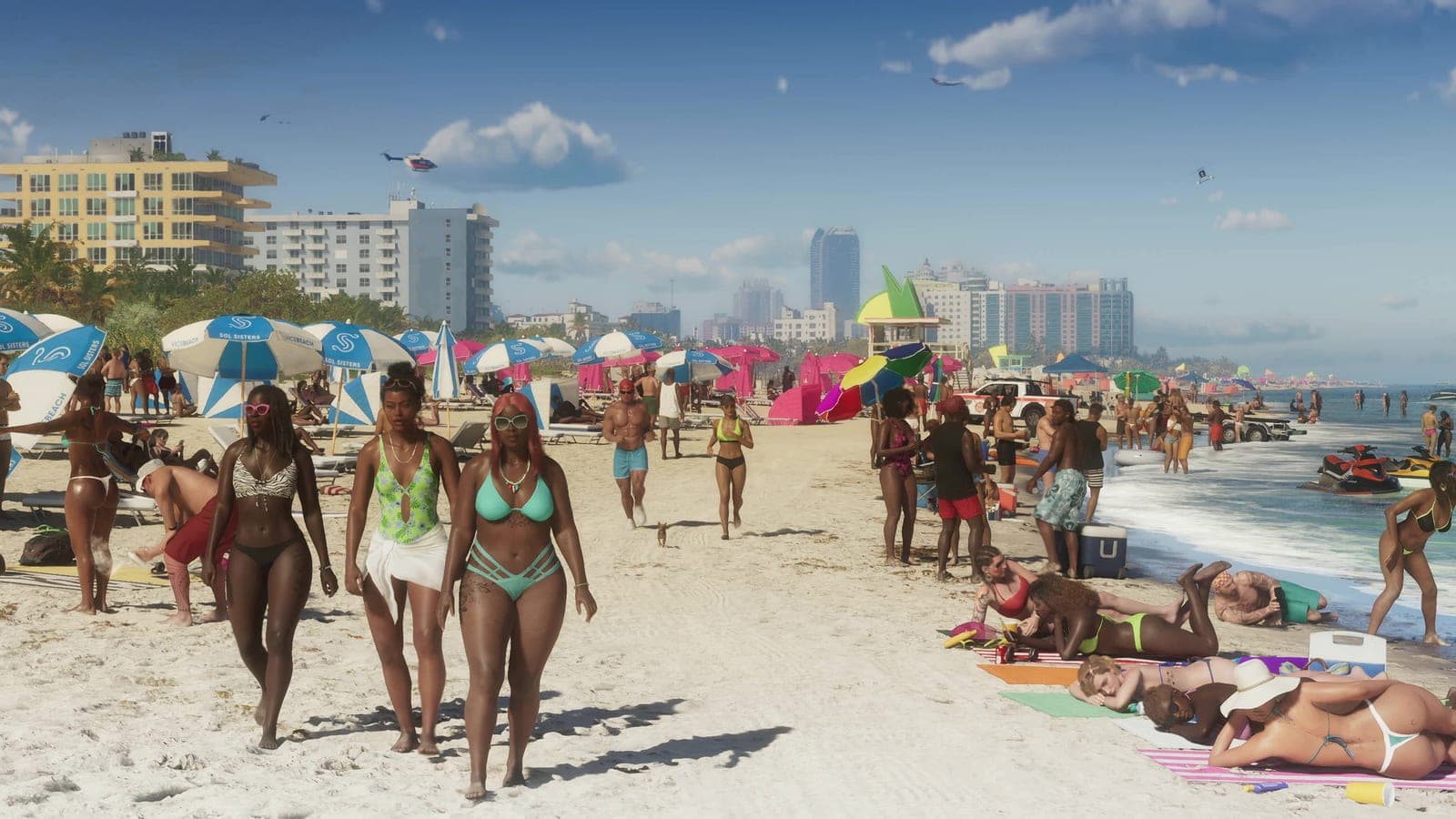
GTA 6's launch trailer, measured: the same 1440p, no QSSR, and a judder that has been there since 2008
Digital Foundry put the Grand Theft Auto VI launch trailer through a frame-by-frame analysis on 16 October. It found no resolution drop, no sign of the PlayStation 5's new QSSR upscaler, and a RAGE engine animation fault going back to GTA IV that now appears to be gone. Here is what a compressed 90-second video can establish, and what it cannot.
Germany, Japan and Korea have now rated GTA 6 — and the last three labels are the ones with teeth
The USK classified Grand Theft Auto VI on 13 September and nobody noticed for a month. CERO's Z appeared on the Japanese store pages on 17 October, and Korea's new private board cleared it on the 16th. That completes the set — but "adults only everywhere" is not what has happened.
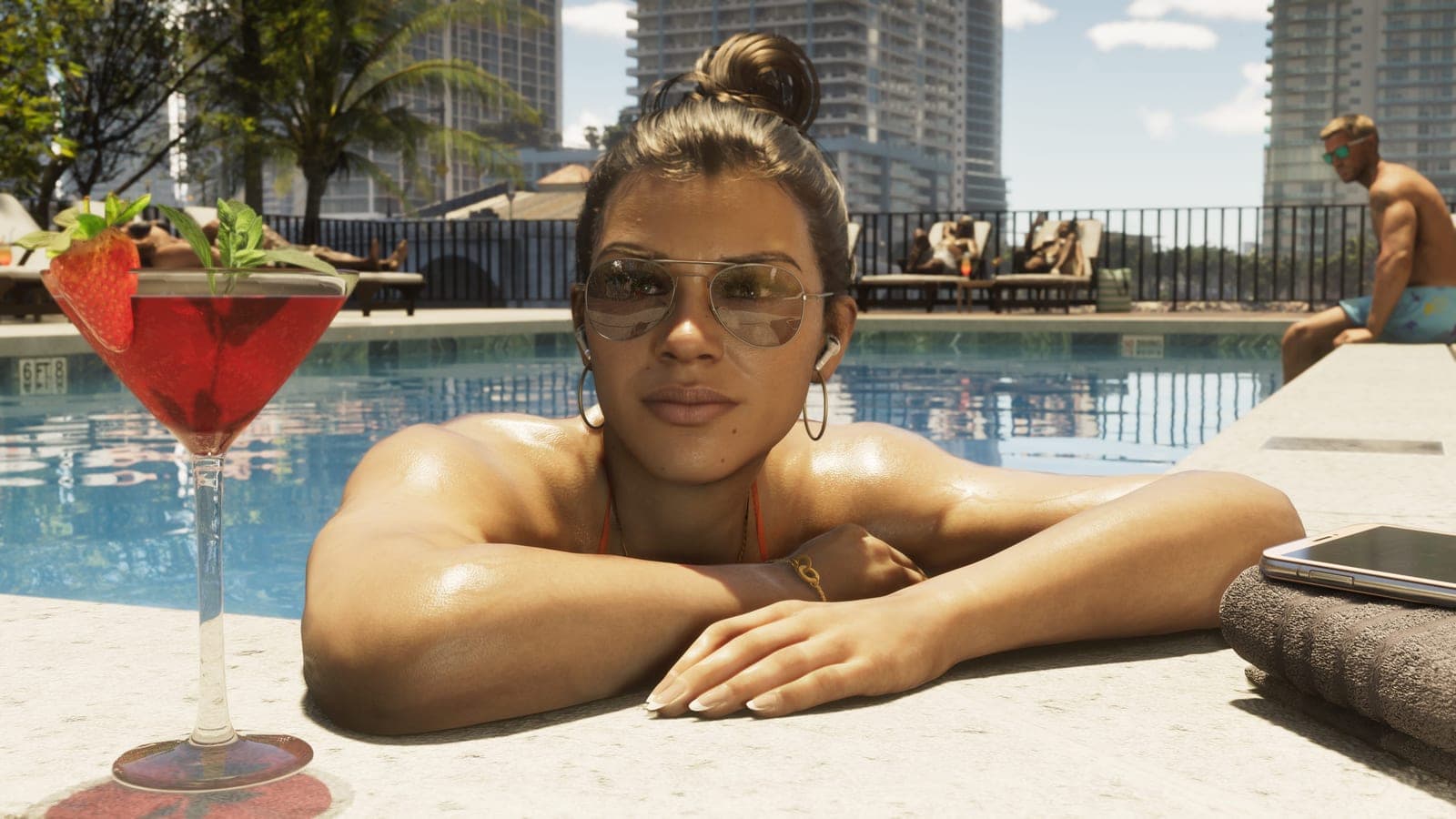
Two guns are missing from GTA 6's banner outside Paris — and the law being cited is about something else
A banner reproducing the Grand Theft Auto VI cover art has gone up on the Mercuriales towers at Porte de Bagnolet with Lucia's pistol and an assault rifle removed. Rockstar has said nothing. France's 1985 firearms advertising law governs adverts for guns, not guns in adverts, and the claim that every GTA 6 poster worldwide has been edited rests on nothing solid.